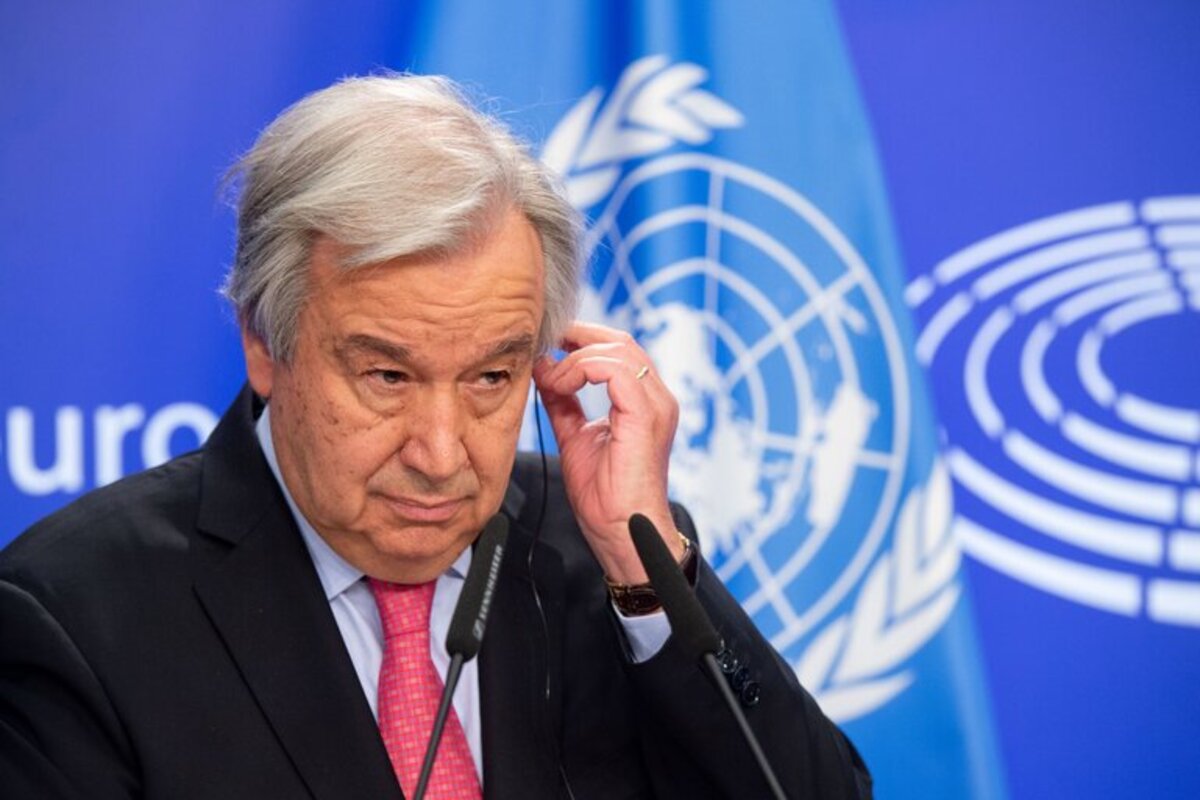
A global platform to support the phase-out of fossil fuels
At the Ministerial Meeting of the International Energy Agency, UN Secretary-General António Guterres called for an honest dialogue and the creation of a global platform to advance the phase-out of fossil fuels. The initiative would bring together oil and gas producers, consumer countries, financial institutions and civil society to plan a gradual reduction of fossil fuel investment while scaling up funding for renewables.
“We have entered the clean energy era”
“We have entered the clean energy era,” Guterres said. “Renewables are now the cheapest, fastest and safest source of power almost everywhere. Investors know it: last year, 2 trillion dollars flowed into clean energy, almost double the amount invested in fossil fuels. Those who lead this transition will lead the global economy of the future. Yet some fossil fuel interests remain stubbornly determined to slow progress, spreading disinformation and pretending that a transition is unrealistic or economically unsustainable.”

He continued: “Let us be clear: the world’s addiction to fossil fuels is one of the greatest threats to global stability and prosperity. Three quarters of humanity live in net-importing countries. They depend on energy they do not control, at prices they cannot predict. Development budgets are drained by energy bills, and countries remain at the mercy of geopolitical turbulence and supply disruptions. This insecurity is built into the system. Delay will only generate instability. We face a choice: design the transition together or be forced into it through crisis and chaos.”
No global consensus despite COP28 commitment
Despite the commitment made at COP28 in 2023 to transition away from fossil fuels, there is still no global consensus on how to implement a credible phase-out of fossil fuels. The platform proposed by Guterres seeks to address this gap, particularly after the 2025 COP in Brazil failed to deliver a clear roadmap.
Nearly ten years after the Paris Agreement, the United Nations faces growing difficulty in maintaining centrality in global climate governance. The Secretary-General’s proposal aims to restore a coordinating role for the UN in international climate efforts, at a time when geopolitical tensions are reshaping energy alliances.
Renewables as a strategic choice in a shifting geopolitical landscape
The energy transition has increasingly evolved into a contest between technological leadership, represented by China, and the defence of traditional energy resources, associated with the United States. Institutions such as the IEA and the UN struggle to function effectively when major actors disengage. Guterres warned that without a coordinated global platform, the transition will still occur, but in a more fragmented and potentially disruptive manner.
In parallel, countries seeking to expand clean energy investment are organising coalitions outside the UN framework. In this context, renewables are also emerging as a strategic instrument. Cooperation among North Sea countries on offshore wind development aims to strengthen regional energy security and reduce import dependence, while reinforcing ties between the European Union and the United Kingdom in the post-Brexit landscape. The EU-India trade agreement also includes dedicated financing for industrial decarbonisation and measures to mitigate the impact of the EU carbon border adjustment mechanism.
Also read “Trina Storage reaches 6 GWh of battery storage projects in Europe“