Why hydrogen cars still have a role in future mobility
Hydrogen is increasingly established in heavy-duty transport, yet it continues to struggle for relevance in the passenger car market, particularly in Europe. BMW believes this situation could change. According to the German manufacturer, hydrogen can complement battery-electric vehicles and provide solutions where other powertrains face limitations.
Rather than competing with electric mobility, hydrogen is presented as one piece of a broader mobility ecosystem, leveraging existing European industrial expertise and supporting competitiveness, flexibility and energy security.
BMW iX5 Hydrogen moves closer to market launch
BMW’s commitment to hydrogen mobility dates back more than a decade. From its first prototype in 2011 to road testing in 2023 and the recent unveiling of the BMW Hydrogen Flat Storage system, the company has continued to invest in fuel-cell technology.
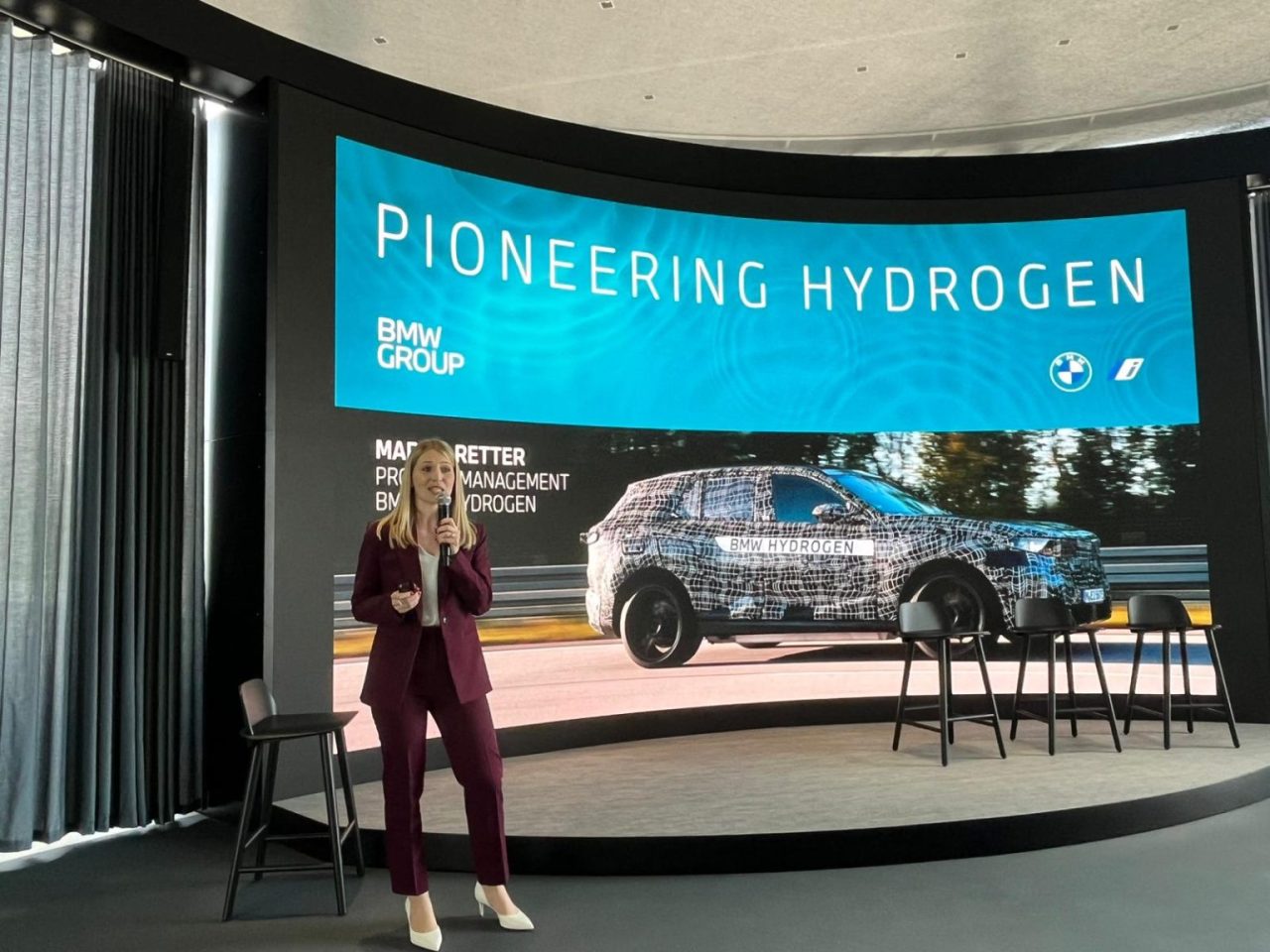
Speaking at the BMW Hydrogen Day event in Milan, Jürgen Guldner, General Project Manager Hydrogen Technology at BMW Group, highlighted the results achieved so far.
“We have taken this vehicle around the world, visiting more than twenty countries and covering over one million kilometres. It performed exceptionally well in every climate and environmental condition.”
He also stressed the benefits of global refuelling standards.
“Refuelling is the same everywhere. There is a single global standard, there are no different plugs or similar issues. Most importantly, the public response to this pilot project has been extremely positive, more positive than we initially expected.”
For BMW, hydrogen remains a complementary technology that broadens consumer choice. As Marisa Retter, BMW Product Manager, explained:
“Today, battery-electric vehicles are central to the decarbonisation of the automotive industry and will remain so. However, at BMW we also see clear opportunities for other solutions because we do not believe that one approach fits every situation. We want to maintain a technology-neutral approach.”
A true X5 with no compromises
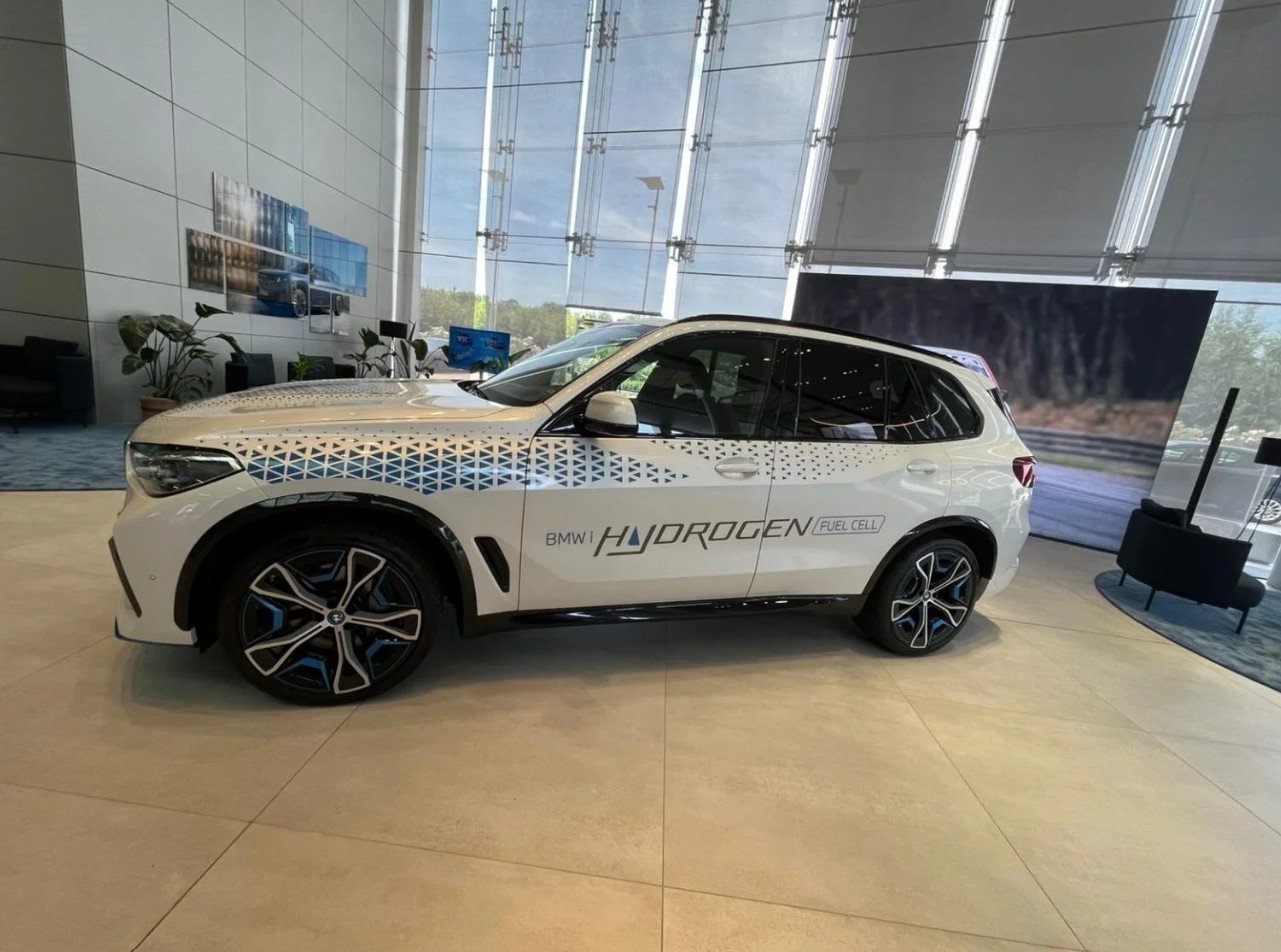
BMW plans to launch its first mass-produced hydrogen vehicle, the BMW iX5 Hydrogen, in 2028.
“We will launch our first series-production vehicle in 2028. It will be a true X5, with no compromises.”
The launch will expand the X5 range to five different powertrain options.
The vehicle is expected to offer specific advantages for certain drivers, including strong performance in cold climates, towing capability and suitability for people living in densely populated areas without convenient home charging access. One of its main selling points will be refuelling speed.
“It will be possible to refuel the vehicle easily in less than five minutes.”
Hydrogen cars and the Toyota partnership
A key part of BMW’s hydrogen strategy is its collaboration with Toyota. According to Retter, the two companies have jointly developed the latest fuel-cell technology.
“This is a joint development between Toyota and BMW.”
The seventh-generation fuel-cell system has been significantly improved.
“We have made it more efficient, more powerful and reduced its size by around 25%.”
These advances will allow BMW to manufacture hydrogen vehicles at its Steyr facility in Austria while maintaining production flexibility.
The new flat hydrogen tanks, capable of storing seven kilograms of hydrogen, will provide a driving range of up to 750 kilometres under the WLTP cycle. Because they occupy the same space as a conventional battery pack, BMW will be able to manufacture different powertrain variants on the same production line.
Hydrogen as a resilience vector for Europe
BMW also rejects the idea that hydrogen and battery-electric vehicles should be viewed as rivals from a sustainability perspective.
“If you consider the entire vehicle life cycle, from raw material extraction to recycling, both technologies are virtually on par,” said Guldner, referring to studies indicating that the lifetime carbon footprint of hydrogen and battery-electric vehicles is broadly equivalent.
However, the strongest argument presented by BMW relates to industrial strategy and geopolitical resilience.
“Hydrogen technology is something that many European countries already master.”
Guldner noted that European suppliers can transfer expertise developed for internal combustion engines to fuel-cell systems, including components such as sensors, valves and cooling systems.
“This means we can have a technology that makes us independent, or at least more independent than battery-electric vehicles, from supply chains that currently depend heavily on China. This is essential for us because, as an industrial company, we must remain flexible and capable of responding to different developments around the world. It is part of resilience.”