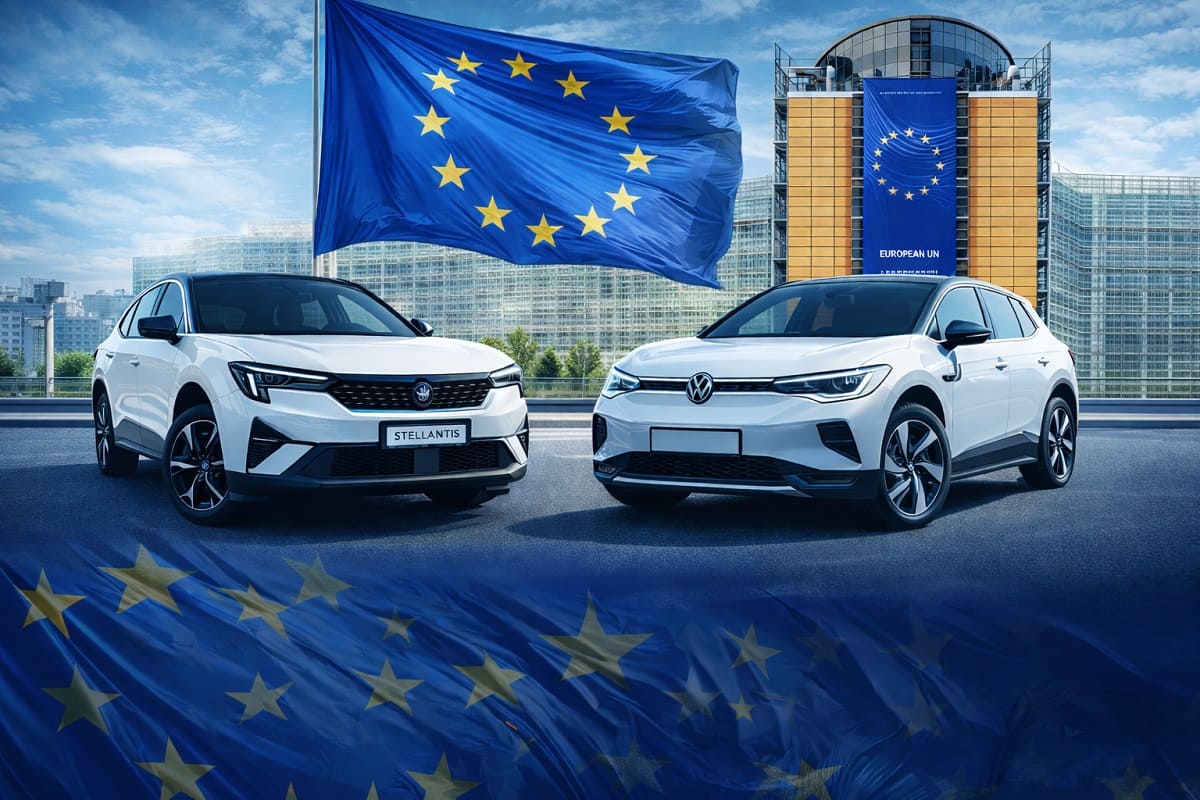
European manufacturers seek backing for electric cars
Europe, with Germany at the forefront, is the world’s second-largest producer of electric cars, after China but ahead of the United States. Now two major European automotive groups, Stellantis and Volkswagen, are calling on Brussels to introduce support measures for Made in Europe BEV manufacturers. The appeal comes from the CEOs of the two companies, Antonio Filosa for Stellantis and Oliver Blume for Volkswagen, writing in Il Sole 24 Ore.
Europe’s automotive industry and the future of electric cars
“In Europe, a new phase of geopolitical competition is opening up. Trade, technology and industrial capacity are being used more than ever to strengthen national interests. Europe must quickly decide how to respond to these challenges,” the two executives write, recalling that “the European automotive industry is an integral part of this, generating 8 percent of European GDP every year and providing jobs to 13 million people”.
Turning sanctions into investments
According to Filosa and Blume, “there is a conflict of objectives between short-term cost pressure, dependence on third countries and long-term strategic resilience”. Hence the request to use “European taxpayers’ money… to promote European production and attract investment into the EU”.
In addition to financial support from Brussels, the two executives are also asking for a specific regulation to obtain a CO2 bonus, which “should also be recognised for all of its electric vehicles. The automotive industry would thus have a positive incentive to maintain its production in the EU and allocate the billions of euros saved in penalties to vital investments on national territory”.
Stellantis and Volkswagen: a message to Brussels
For Filosa and Blume, it would be a mistake to build a “protectionist barrier around every sector of work”. The reference is to tariffs on imports of Chinese vehicles. They insist instead on the need to “build or strengthen our resilience in selected strategic components”, because “Europe must urgently decide whether it wants to become a market for others or remain a producer and an industrial power in the future”.
European cars for Europeans
The two CEOs stressed that both companies have always built cars by Europeans for Europeans and that around nine out of ten vehicles sold in the European Union are produced within EU territory. At the same time, European operations must compete with importers operating under regulatory and social conditions that are less strict than those in Europe.
Every vehicle meeting Made in Europe criteria should receive a label, explain Filosa and Blume, “and benefit from various advantages, such as national purchase incentives or public procurement. But vehicle-level purchase incentives are not sufficient: manufacturers that concentrate most of their production in Europe should obtain advantages that at least offset the additional costs associated with Made in EU”.