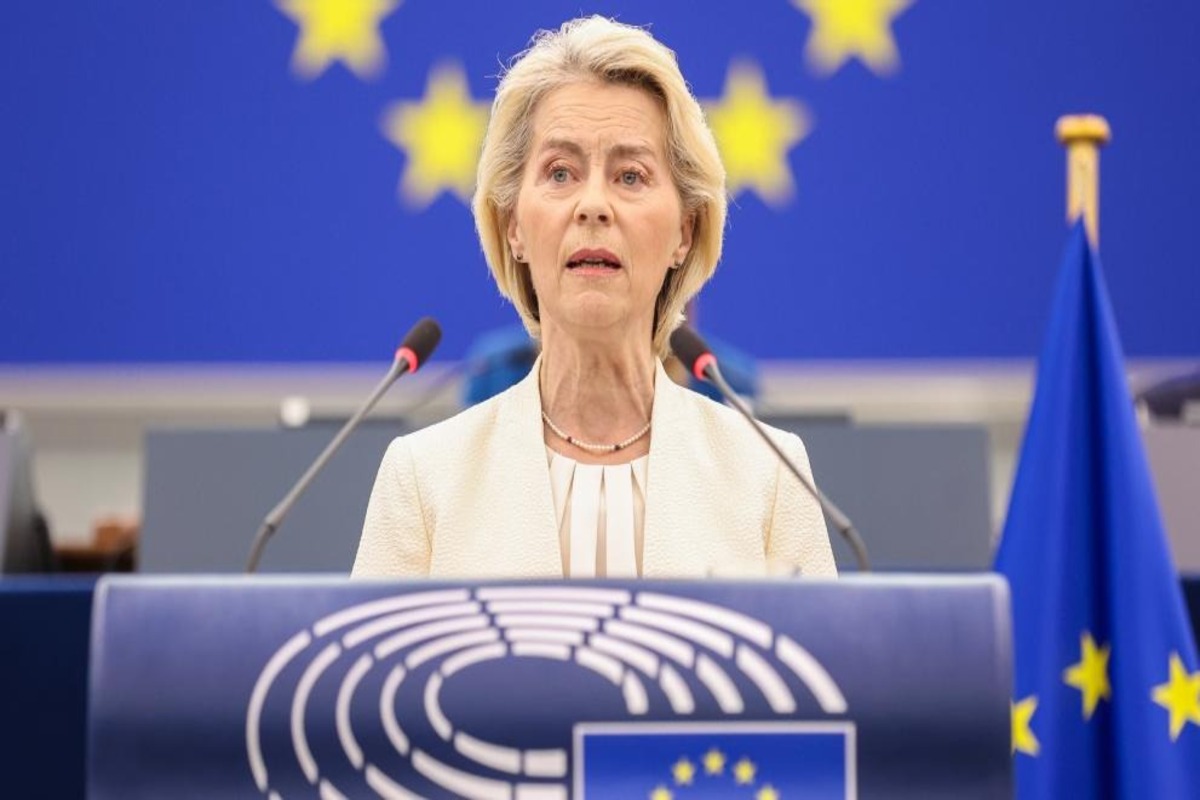
State of the European Union 2026: energy independence takes centre stage
“It was the best of times, it was the worst of times.” With these words, Charles Dickens described Europe during the French Revolution. “Those same words are a fitting description of the world we live in,” said European Commission President Ursula von der Leyen in Strasbourg during her 2026 State of the European Union address.
“The state of our Union is as strong as it has ever been, and the state of our Union can feel as precarious as it has ever been,” von der Leyen continued. “Those statements may sound incompatible, but they are both true. And both reflect this complex age of great possibilities and great dangers. In this world, Europe has chosen to chart its own course. And what is now emerging is a stronger and more independent Europe.”
For von der Leyen, Europe cannot remain an industrial powerhouse if energy prices stay structurally too high. “When Russia cut its gas supplies, we responded without delay and today our sources of supply are more diversified. We have invested, and continue to invest, in clean energy produced at home,” the Commission President said.
Yet the closure of the Strait of Hormuz has once again exposed Europe to the cost of its dependence on imported fossil fuels. “Since the conflict began, fossil fuel imports have cost us an additional €90 billion, without adding a single molecule of energy,” she added.
This is why the Commission intends to step up the production of affordable, domestically generated clean energy. Achieving independence, von der Leyen argued, requires electrification.
“We aim to double the share of electricity by 2040,” the President said. “In this way, Europe could reduce the cost of fossil fuel imports by €260 billion a year. But we must also ensure that the electricity we produce is available where it is needed.”
“Last year we installed more than 80 gigawatts of renewable energy capacity, but six times that capacity is still waiting to be connected to the grid. This is why we urgently need the Grids Package. We need to invest faster. Speed up grid connections. Expand storage.”
How the State of the European Union links energy and independence
In her State of the European Union address, von der Leyen made one message particularly clear: “This must be Europe’s independence moment.”
The European Union entered the turbulence of 2026 from a stronger position than in previous years, following efforts to cut emissions, diversify energy supplies and accelerate the green transition. However, to address the immediate impact of higher prices and improve resilience, the European Commission presented the Accelerate EU package in April, an integrated strategy designed to operate on two levels.
The short-term emergency response is intended to provide immediate and targeted support to vulnerable citizens and energy-intensive industries, mitigating the economic impact of soaring prices.
The long-term structural measures, meanwhile, are designed to introduce deeper reforms aimed at ending Europe’s dependence on imported fossil fuels.
At the same time, the European Union has taken a historic decision, introducing a complete ban on Russian gas imports into the EU, which is due to become definitive from 2027.
Moving beyond dependence on imported fossil energy also represents an opportunity to reduce expenditure. Accelerating the transition could allow the EU to cut fossil fuel import costs, generating estimated savings of up to €130 billion a year by 2030.
The strategy rests on three pillars. Half of the savings would come from replacing persistent fossil fuel demand in electricity generation with clean, hydroelectric and renewable energy sources. A further 25% would result from increased electrification and energy efficiency across key sectors, while the remaining 25% would be delivered through the development of smart grids and greater energy system flexibility.
Decarbonisation as a pillar of European independence
In 2025, for the first time, the European Union generated more electricity from wind and solar combined than from fossil fuels as a whole. Last year, the share of renewables in the European electricity mix increased from 36% in 2021 to 47%. Overall, 70% of the electricity generated in the EU now comes from low-carbon sources.
The strategic importance of renewables became particularly evident during the Strait of Hormuz crisis. The rapid expansion of solar power alone enabled Europe to save almost €110 million a day by avoiding unnecessary natural gas imports.
In this context, the potential of rooftop solar installations is substantial. Estimates indicate that by 2050, residential and industrial solar panels could meet around 40% of Europe’s electricity demand.
The Electrify Now initiative
In July 2026, the Commission established an Electrification Action Plan aimed at making Europe the “first electrified continent”. The plan was accompanied by a proposal to revise grid charges to prevent electricity from being taxed more heavily than gas.
The global Electrify Now campaign was also launched to accelerate electrification across industry, transport and buildings.
Grids, storage and Energy Highways
Through the Grids Package and major cross-border interconnections known as Energy Highways, the European Union intends to tackle infrastructure bottlenecks and build the electricity network required for the electrification era.
To strengthen the infrastructure underpinning the transition, the EU has set out two major initiatives. The Battery Booster Package provides €1.5 billion to support industrial battery production and the associated value chain in Europe.
The Energy Highways and Grids Package, meanwhile, focuses on electricity networks and cross-border interconnections. The EU’s internal energy market already generates €34 billion in annual savings for consumers, a figure that could rise to €40-43 billion a year by 2030 with more integrated grids.
One example is the January 2026 agreement with Denmark and Germany for a 3 GW offshore wind hub on the island of Bornholm in the Baltic Sea, backed by €645 million through the Connecting Europe Facility.
Mobilising capital and the role of the EU ETS
Achieving energy independence will require substantial investment. The Commission has therefore developed the Clean Energy Investment Strategy, designed to mobilise private financing for electricity grids, clean technologies and energy efficiency measures.
The strategy is accompanied by close cooperation with the European Investment Bank Group (EIB), which intends to mobilise more than €75 billion over the next three years to support the transition.
The EU Emissions Trading System (EU ETS) has shown that decarbonisation and economic growth can advance in parallel. Since 2005, emissions from sectors covered by the ETS have fallen by 50%, while the EU economy has continued to grow.
The system has generated more than €280 billion that has been reinvested in the green transition. Following the revision launched by the European Commission, the EU ETS has been weakened, but Member States will be required to allocate at least half of the revenues to decarbonising the sectors covered by the system.
