How the Middle East war is reshaping EU energy policy
The Middle East war is forcing the European Union to rethink its energy strategy, with Brussels now moving to reduce electricity taxes and speed up the rollout of clean energy solutions. According to a draft document prepared by the European Commission, the initiative is part of a wider plan to shield consumers and businesses from volatile oil and gas prices.
In the short term, the EU aims to ease pressure on energy bills by cutting electricity taxes and network charges. Over the longer term, the strategy focuses on large-scale electrification of the economy, supported by renewable energy, to reduce exposure to external supply shocks and geopolitical risks.
Clean technologies at the core of the transition
The draft plan highlights a faster deployment of key technologies such as heat pumps, electric vehicles and upgraded grid infrastructure. The objective is clear: reduce dependence on natural gas and oil earlier than previously planned.
Brussels is also preparing legislative changes to ensure electricity is taxed less heavily than fossil fuels, making it easier for Member States to support energy-intensive industries.
A coordinated strategy to prevent future crises
The Commission is expected to present the proposal on 22 April, following initial reports by Bloomberg. The document outlines a broader strategy to protect Europe not only from the current crisis linked to the Middle East war, but also from future energy shocks.
“The benefits of this transition clearly outweigh the costs. Europe cannot afford to remain exposed to increasingly frequent energy shocks,” the draft states, as reported by Reuters. It also warns that delays in energy transition investments could lead to higher long-term costs for society.
Priority investments and grid modernisation
In May, the EU executive is set to introduce a list of priority investments aimed at boosting energy efficiency and low-carbon technologies. These measures are designed to accelerate the replacement of oil and gas.
At the same time, a new legislative proposal could require Member States to support investments in smart grids, enabling a higher integration of renewable energy into the system.
Managing gas storage and market volatility
Among the short-term actions under consideration is a coordinated approach to refilling gas storage across the EU. This would help prevent price spikes caused by competition among companies rushing to secure supplies.
Brussels is also expected to propose an electrification target by summer, aimed at pushing industries towards faster adoption of electric solutions.
Middle East war and the cost of fossil dependence
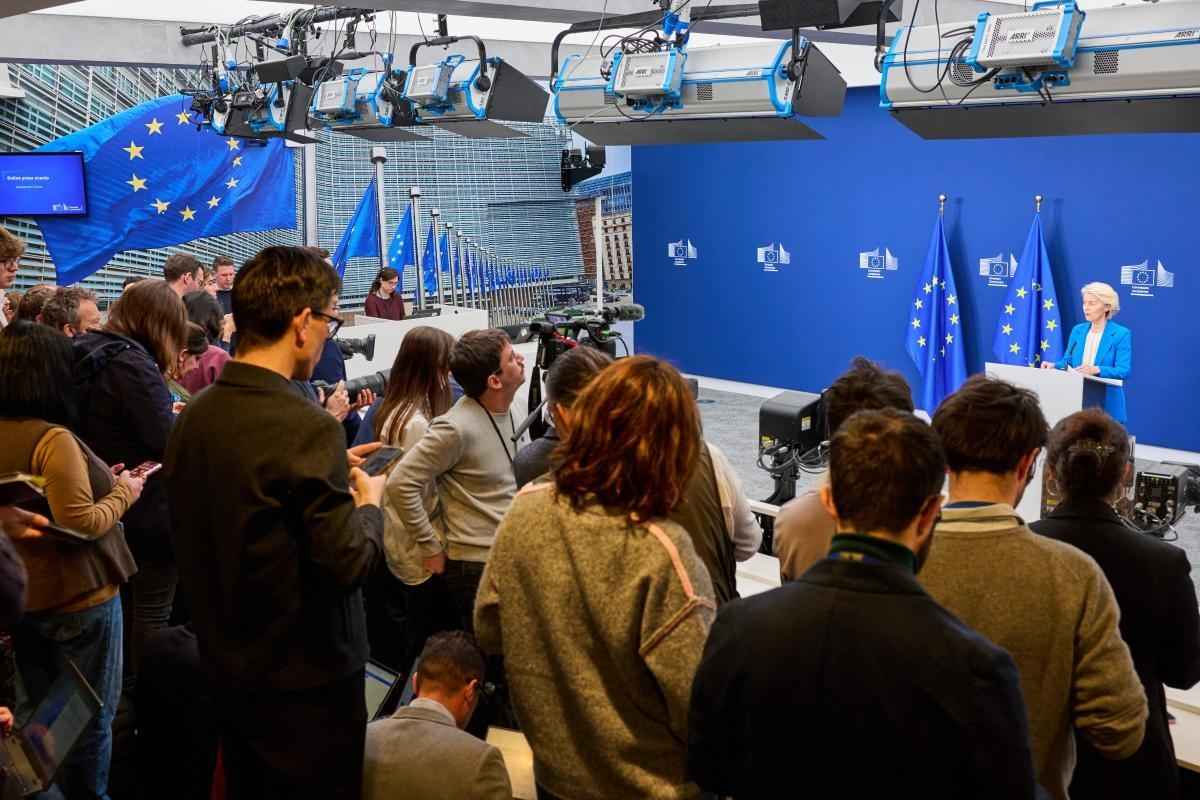
European Commission President Ursula von der Leyen recently underlined the scale of the challenge. “Since the beginning of the conflict, 44 days ago, our spending on fossil fuel imports has increased by more than €22 billion,” she said.
“In 44 days, €22 billion, without obtaining a single additional molecule of energy. This shows the enormous impact of the crisis on our economy.”
She warned that even if hostilities were to stop immediately, disruptions to energy supplies from the Gulf would persist.
Efficiency and electrification as structural solutions
Von der Leyen stressed that fossil fuels will remain the most expensive option in the coming years, reinforcing the need to act on energy efficiency and electrification.
“The cheapest energy is the energy we do not use,” she said, pointing to building renovations and industrial upgrades as key levers.
The EU is also working to stabilise energy prices through the emissions trading system, with a full revision expected in July and legislative proposals on electricity taxation due in May.
Accelerating electrification across Europe
The Commission sees electrification as the definitive pathway out of recurring crises linked to the Middle East war and broader geopolitical instability.
“We must accelerate the electrification of our economy, our industries, our homes and our mobility,” von der Leyen said. “Electrifying Europe means making Europe more independent.”
However, she acknowledged that the EU is currently lagging behind both China and the United States, and pledged to present a dedicated electrification strategy before the summer, alongside a new ambitious target.
Grid expansion and investment mobilisation
The urgency of expanding storage capacity and strengthening grid connections was also highlighted, in line with the Grid Package presented in December.
Von der Leyen urged the Council and Parliament to approve the package by early summer, ahead of the original timeline.
She also called on Member States to make better use of EU funds, including cohesion funds, to invest in grids, storage and batteries. To complement public funding, the Commission plans to convene an Investment Conference to mobilise private capital.
Flexible state aid rules to support industry
As part of the immediate response to the crisis triggered by the Middle East war, the Commission will consult Member States this week on more flexible state aid rules. The goal is to adopt a new temporary framework by April to support the most exposed sectors.