EU member states back amendments to stabilise ETS2 prices
EU countries support the European Commission’s plans aimed at curbing prices in the new emissions trading system for buildings, road transport and additional sectors under ETS2. On 18 February, the Council of the European Union expressed its support for amending the Market Stability Reserve to allow a gradual and smoother start of ETS2. The corrective measures are designed to prevent a spike in fuel prices. However, the amendment does not alter the overall structure of the reserve.
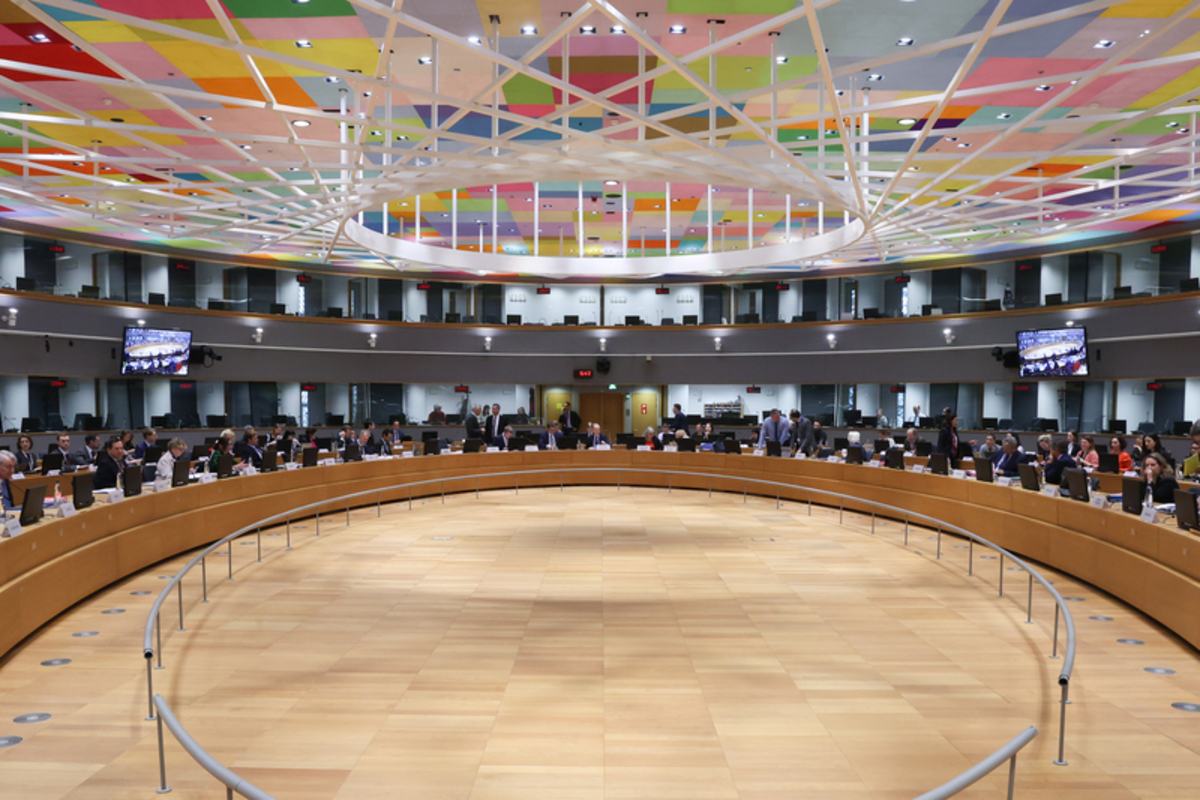
The changes to the emissions trading system have not yet been negotiated and formally adopted by EU member states and the European Parliament. During a closed-door meeting, EU ambassadors approved the Commission’s proposed price containment measures.
The role of the Market Stability Reserve in ETS2
The Market Stability Reserve is a tool designed to manage imbalances between supply and demand in ETS2, automatically adjusting the number of emission allowances available in response to price fluctuations.
“The new emissions trading system for buildings and road transport must rest on solid foundations. The Council’s position on adjusting the Market Stability Reserve, the system’s safety valve, sends a clear signal: the EU is committed to a stable and predictable carbon market,” said Maria Panayiotou, Minister of Agriculture, Rural Development and Environment of the Republic of Cyprus.
Stability and predictability for the European carbon market
Member state ambassadors supported the Commission’s proposal for a targeted amendment to the reserve without introducing broader structural changes. The EU executive had presented the proposal following requests from 19 countries seeking to ensure a less risky launch of ETS2 for EU citizens.
The approved amendments are intended to moderate ETS2 prices by releasing additional emission allowances onto the market if the carbon price reaches €45 per metric tonne of CO₂, potentially adding up to 80 million allowances annually.
What the revised Market Stability Reserve provides
- Extension beyond 2030: to enhance long-term predictability and investor confidence, the reserve will be extended beyond 2030. The 600 million allowances currently held in the reserve will remain available for future release.
- Price control mechanism: the current mechanism provides for the release of 20 million allowances when the carbon price exceeds €45 per tonne of CO₂ equivalent, based on 2020 price levels. The amendment adds an additional 20 million allowances to each release and allows activation twice per year. This means up to 80 million additional allowances could be placed on the market annually.
- Gradual release: currently, when the number of allowances in circulation falls to 210 million, 100 million are released from the reserve. Under the amendment, if allowances fall below 260 million but remain above 210 million, a smaller volume will be released. The mechanism is intended to avoid abrupt supply fluctuations and send signals of stability to the market.
Delayed launch of ETS2
Some European governments, notably Slovakia and the Czech Republic, have opposed the introduction of ETS2, concerned that the system could impose excessive costs on consumers and lead to higher prices for heating and transport fuels. These countries are pushing for a further delay of the mechanism. The EU has already postponed the launch of ETS2 by one year, moving it to 2028.
To persuade more reluctant countries, the Commission has also made advance funding available to support investments in cleaner heating and cooling systems. Member states that have transposed ETS2 will be able to access financing and pre-financing programmes before the new system enters into force in 2028.
A group of other governments, including Sweden and the Netherlands, strongly opposes further delays. These countries fear that an additional postponement would undermine EU climate policies and signal uncertainty to investors.
Also read: “UN: Guterres relaunches international dialogue on the phase-out of fossil fuels“