


The global energy crisis is driving coal use higher, with the IEA forecasting coal consumption could reach a record 8.94 billion tonnes in 2026, up 1.2% from last year. Rising gas prices, stronger cooling demand in Asia and weaker hydropower generation are reshaping the outlook for the world’s most carbon-intensive fossil fuel.

Coal consumption could reach 8.94 billion tonnes in 2026
The 2026 energy crisis has so far failed to generate the necessary urgency to accelerate the expansion of European solar power. At global level, however, it is providing fresh momentum to coal consumption. Demand could reach a new all-time high this year of 8.94 billion tonnes, 1.2% more than in 2025.
The estimates come from the International Energy Agency (IEA), whose Coal Mid-Year Update 2026 provides an overview of the latest trends in coal production, consumption and prices.
Energy market uncertainty clouds the IEA outlook
The report comes with a considerable degree of uncertainty. The intensification of the conflict between the United States and Iran has raised concerns about further disruptions to energy supplies from the Middle East. More importantly, it makes reliable forecasts increasingly difficult, particularly as the outlook is already affected by uncertainty surrounding the impacts of the Super El Niño.
To be clear, the current war has no direct impact on the coal sector. Countries bordering the Persian Gulf are neither major coal producers nor significant consumers. Coal shipping also relies on routes that are largely separate from the Strait of Hormuz, including those connecting Australia and Indonesia with China, India, Japan and South Korea, as well as Atlantic trade routes.
Gas shortages are supporting coal consumption
However, disruptions to liquefied natural gas supplies and the resulting increase in gas prices have prompted some markets to return to fossil coal or increase its use, as it remains cheaper and, under current circumstances, less exposed to geopolitical supply risks.
Combined with an expected rise in cooling demand across Asia and lower hydropower generation, two likely consequences of El Niño, these factors have led IEA analysts to revise their 2026 coal consumption forecasts upwards.
Global coal consumption from 2025 to 2027
Taking a broader view of the market, however, makes it more difficult to identify a clear long-term trend.
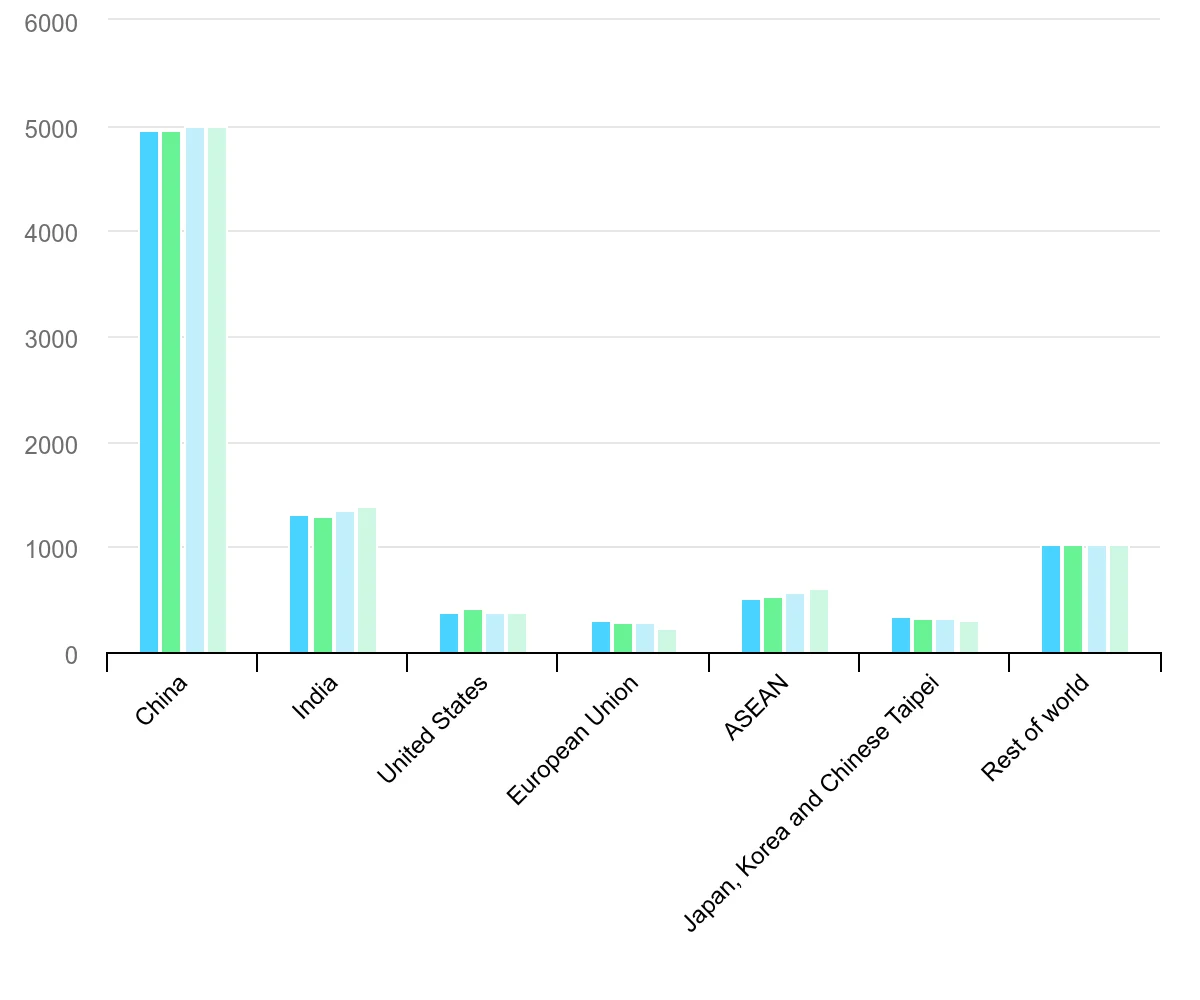
In 2025, global demand slowed as coal-fired electricity generation declined for the first time in both China and India. The 8.84 billion tonnes consumed during the year still represented a record, but were only 0.3% higher than in 2024.
“This modest increase suggests that coal demand has entered a period of broad stability following the rapid growth recorded at the beginning of the decade,” the Agency said.
India and South-east Asia drive demand higher
In 2026, despite diverging regional and sectoral trends, the IEA expects coal consumption to increase slightly worldwide. Growth is being driven by strong demand in India and South-east Asia, alongside upward revisions to the outlook for China, Europe, Japan and South Korea.
The trajectory could change again in 2027, according to the report. Much will depend on whether the conflict ends and, consequently, on developments in the gas market.
If LNG flows through the Strait of Hormuz recover and natural gas prices return to pre-war levels, global coal demand could decline. If disruption persists, however, the pressure could work in the opposite direction, potentially pushing the sector to yet another record.
The emissions impact will therefore require close attention. In 2025, coal combustion released 15.5 gigatonnes of CO2, out of approximately 37.5 Gt of total energy-related emissions.


