World’s largest flow battery project takes shape in Switzerland
For the first time in years, the title of world’s largest flow battery may no longer belong to China. While the current record is still held by a Chinese project, that leadership could change within the next year thanks to a massive 1.5 GWh storage installation under development in Laufenburg, Switzerland.
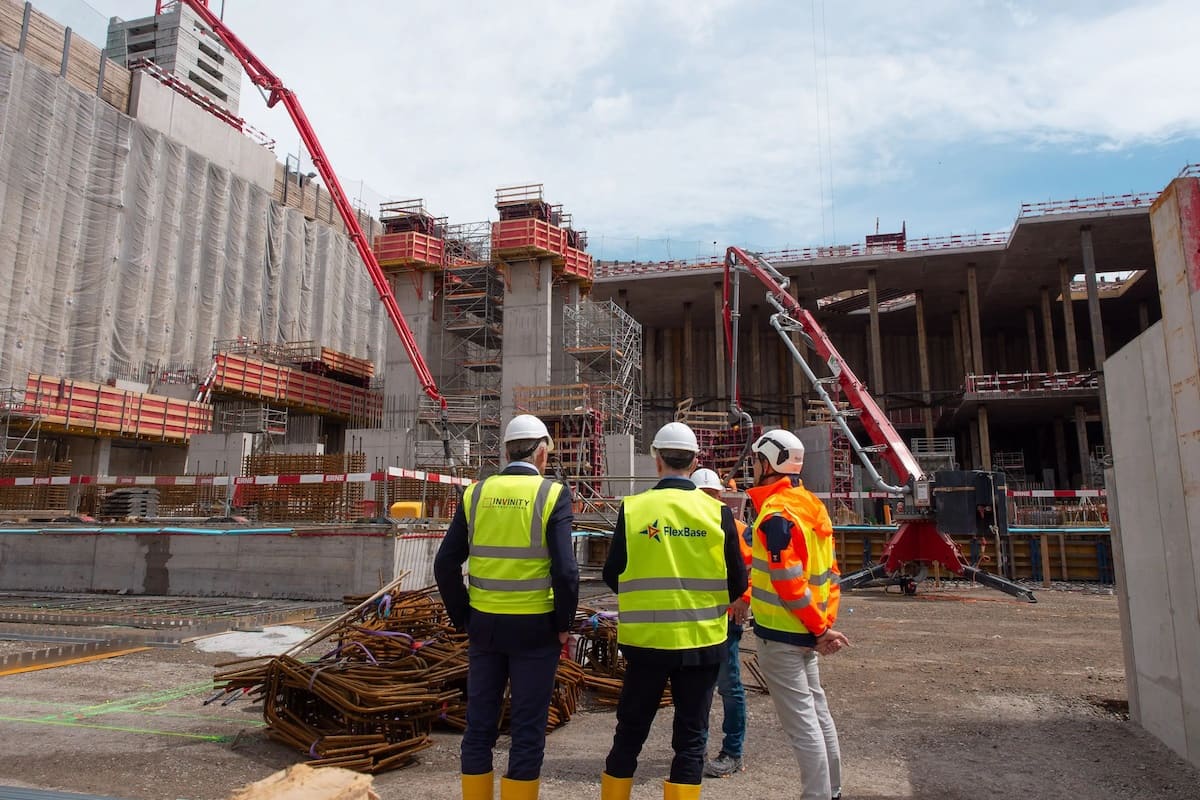
The project is being developed by FlexBase Group, an energy distribution company that has transformed a small data processing facility into a 40,000-square-metre technology hub. The site is described as home to the “world’s first sovereign AI factory”.
To improve the site’s energy security, the company decided to combine electricity from the grid with two integrated systems: a 2 MWp photovoltaic façade and a large-scale battery storage installation. That is where Invinity Energy Systems enters the picture, supplying its vanadium flow battery technology for the project.
China may lose its dominance in the world’s largest flow battery market
The Anglo-Canadian company has already gained visibility in Europe through projects such as the Copwood VFB Energy Hub, which, with 20.7 MWh of capacity, is expected to become Europe’s largest operational vanadium flow battery installation by the end of 2026.
This time, however, Invinity is attracting global attention by potentially taking away a title that has so far remained firmly in Chinese hands.
Until now, the world’s largest flow battery project was the 1 GWh, 200 MW installation developed by China Huaneng in Xinjiang. That project itself had previously overtaken another entirely Chinese-made redox flow battery system.
China’s dominance in this segment is hardly surprising. Beijing has spent years pursuing an aggressive strategy on energy storage, both in industrial deployment and technological research.
For Europe, reclaiming at least one global record in strategic storage technologies carries symbolic and industrial significance.
“Invinity proved to be the strongest partner, offering the most attractive overall package with the lowest lifecycle costs (LCOS),” said Marcel Aumer, CEO, Chairman and Founder of FlexBase Group. “Invinity’s vanadium flow technology fits our project perfectly because of its safety, especially its non-flammability, its cycling stability and its operational flexibility.”
Why vanadium flow batteries are gaining momentum
As Aumer highlighted, vanadium flow batteries offer important advantages for stationary energy storage applications. Although their upfront costs remain higher than lithium-ion systems, VFB technology provides exceptional safety, long operational life, favourable long-term lifecycle costs and minimal operational constraints.
Unlike conventional lithium-ion batteries, flow batteries can be continuously charged and discharged at any state of charge, from 0% to 100% depth of discharge, without degradation. These systems can also support more than 20,000 deep discharge cycles.
World’s largest flow battery could accelerate Europe’s storage ambitions
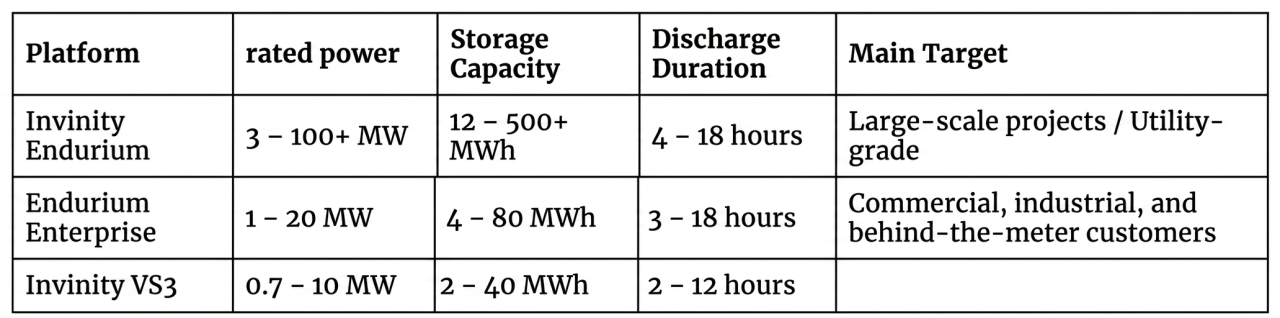
Invinity’s systems are built around a modular and scalable architecture designed for turnkey deployment. The units can also be stacked across two or three levels to optimise space efficiency on-site.
The company currently offers three main technology platforms.
According to industry publication Energy-Storage.News, the announcement of the partnership with FlexBase Group triggered a rapid rise in Invinity’s share price.
As Europe seeks to strengthen grid resilience, support renewable integration and reduce dependence on imported fossil fuels, projects such as the world’s largest flow battery could become increasingly important for the continent’s industrial and energy strategy.