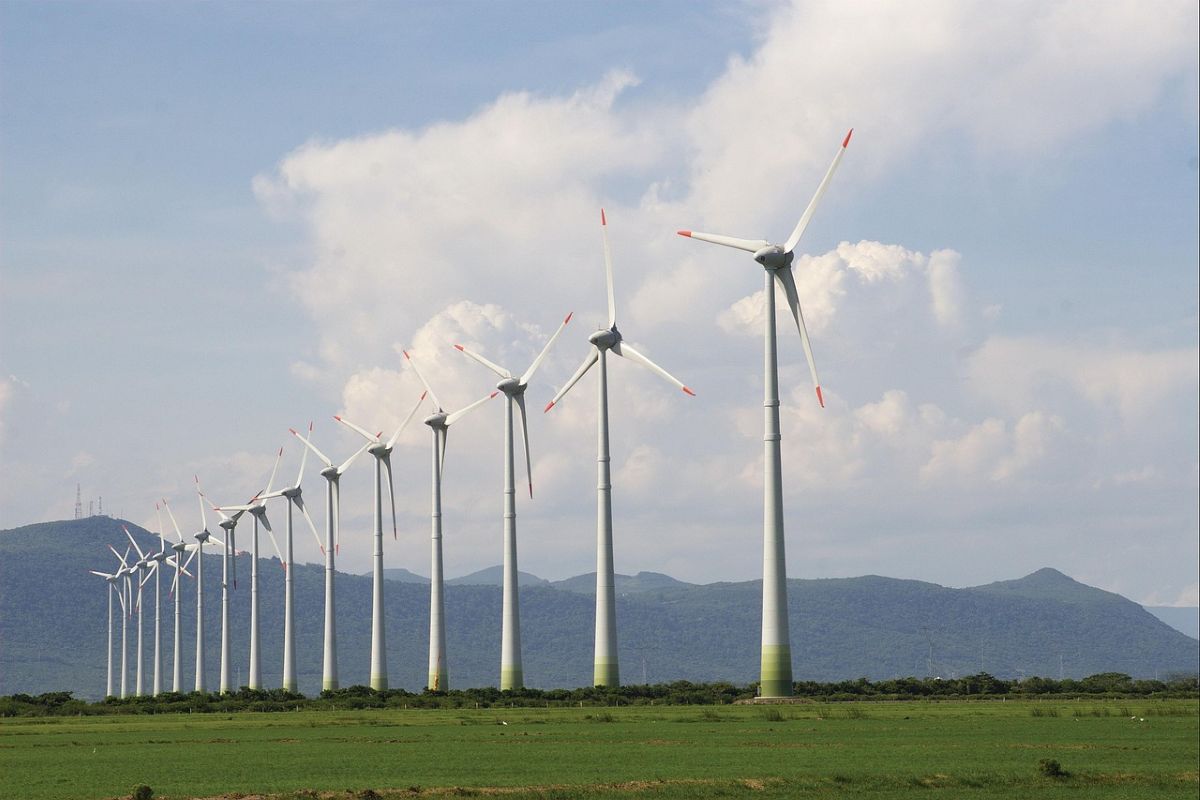
2025 marks a rebound for wind investments in Europe
In 2025, wind investments in Europe amounted to €45 billion, while new installations reached 19.1 GW. Total cumulative capacity rose to 304 GW, partially revising the estimates published in September 2025 that had portrayed a sector under pressure.
According to WindEurope’s report Wind energy in Europe – 2025 Statistics and the outlook for 2026-2030, the industry is ready to build 151 GW between 2026 and 2030, including 112 GW within the EU. However, the sector warns that possible changes to the electricity market design and the EU ETS could freeze investment flows.
WindEurope, the European wind industry association, underlines that in 2025 wind covered 20 percent of Europe’s electricity. The trajectory points to 34 percent by 2030 and more than 50 percent by 2050. The figures show industrial strength. But regulatory stability remains decisive.
New wind capacity in Europe in 2025
In 2025, Europe installed 19.1 GW of new wind capacity, bringing total installed capacity to 304 GW. Onshore represented 90 percent of new installations, with more than 17 GW added, including 2 GW from repowering.
Germany led with 5.2 GW, followed by Türkiye with 2.1 GW, Sweden with 1.8 GW and Spain with 1.6 GW. Nine countries exceeded 500 MW of annual installations.
Offshore connected only 2 GW, the lowest figure since 2016. Construction delays affected results. The United Kingdom, Germany and France were the only countries to connect new offshore wind farms.
Lithuania stood out with 759 MW installed, representing an increase of more than 40 percent of its national capacity. In 2025, wind covered 33 percent of Lithuania’s electricity demand, strengthening energy independence.
Can market design and ETS reform slow wind investments?
WindEurope warns that interventions in the electricity market design or in the architecture of the EU ETS could undermine investor confidence. In 2022, political interventions reduced wind investments to their lowest level since 2009. Turbine orders fell by 47 percent year on year.
According to the association, lower electricity prices are achieved by increasing the supply of clean power. Instruments such as Power Purchase Agreements and Contracts for Difference reduce the cost of capital and provide long-term visibility.
The report indicates that regulatory stability is essential to support the 151 GW plan to 2030. Any retroactive change or structural revision could slow financial flows.
The role of electricity grids in wind growth
Electricity grids remain the main bottleneck. More than 500 GW of wind projects are waiting for grid connection. Europe must invest €584 billion by 2030 to modernise infrastructure.
The EU Grids Package proposes new planning rules and a shift from “first come, first serve” to “first ready, first serve”. It provides for greater European coordination, stronger interconnections and the digitalisation of permitting processes.
The package also includes a directive to accelerate permitting, introducing tools such as “positive silence” and national one-stop digital portals. The objective is to reduce queues and prioritise mature projects.
Why electrification is decisive for future wind investments
The report highlights that electricity demand in the EU is growing too slowly. Electrification increases by around 1 percent per year, compared with 4 percent in China. Weak demand reduces the bankability of new projects.
WindEurope calls for the Electrification Action Plan to focus on sectors with rapid returns, such as low- and medium-temperature industrial heat, through heat pumps and electric boilers. It proposes reforming taxes and levies to make electricity more competitive than gas.
Currently, household electricity charges in Europe are almost 15 times higher than in China. In Spain, regulated electricity charges are 19 times higher than those on gas. Fiscal reform is identified as a lever to stimulate demand.
Outlook 2026-2030: unresolved risks
Between 2026 and 2030, Europe is expected to install 151 GW of new wind capacity. More than one third of EU expansion will be driven by the German onshore market.
Three central issues remain: insufficient grids, slow electrification and permitting delays. The European Commission has launched infringement procedures against 26 of 27 Member States for failing to fully transpose the strengthened Renewable Energy Directive.
According to WindEurope, competitiveness and energy security depend on maintaining stable market signals, accelerating grid connections and strengthening electricity demand. Wind investments in Europe in 2025 show that capital is available. The challenge is to ensure political and regulatory conditions consistent with the EU target of 425 GW by 2030.