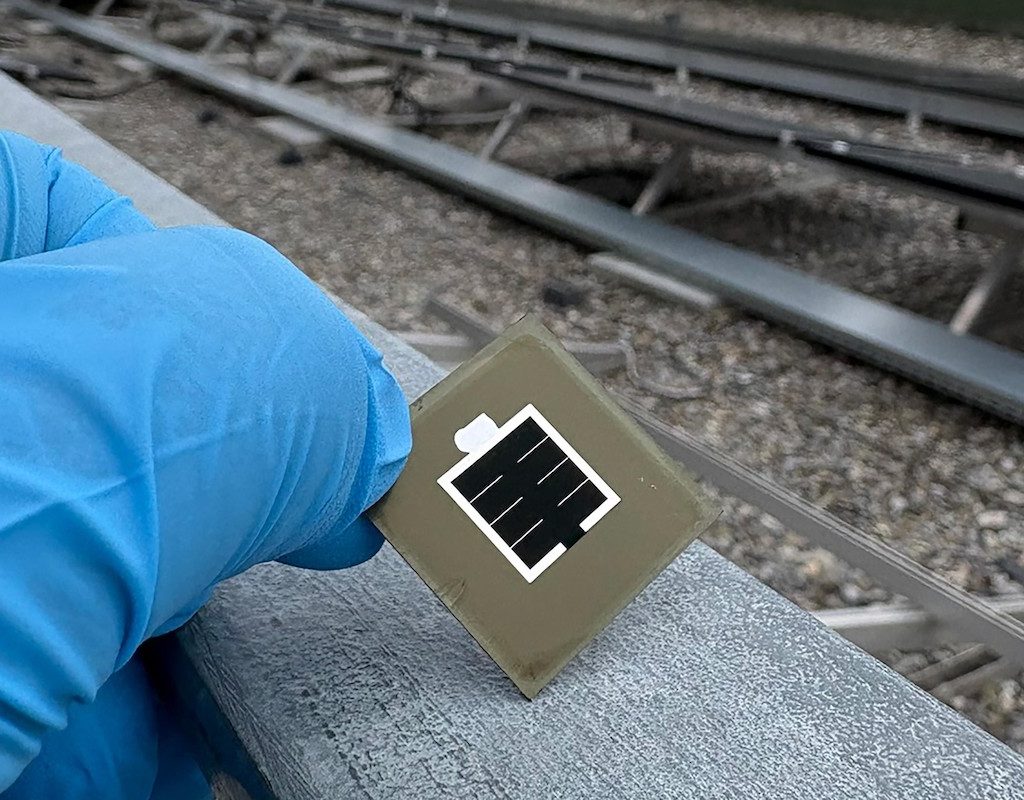
Triple-junction perovskite-silicon solar cells set a new efficiency record
The theoretical efficiency limit, estimated at over 40%, remains distant. Yet triple-junction perovskite-silicon solar cells are making rapid progress towards that goal.
The latest breakthrough comes from the École Polytechnique Fédérale de Lausanne (EPFL), where a team of scientists has achieved a new world record in light-to-electricity conversion using this architecture: 30.02% efficiency on a 1 cm² active area.
This result exceeds the previous record, set by the National University of Singapore, by 2.92 percentage points.
Matching III-V multi-junction performance at lower cost
The result has been independently certified and, although still at laboratory scale, represents a significant milestone.
“We have demonstrated,” explains Kerem Artuk, first author of the study, “that through intelligent design and processing, we can reach performance levels traditionally reserved for the more expensive III-V multi-junction solar cells used in space applications.”
These high-end cells can achieve efficiencies of up to 37% but cost around 1,000 times more per watt than conventional terrestrial technologies.
“Our approach opens the door to a new generation of high-efficiency, industrially viable multi-junction photovoltaic cells,” Artuk adds.
Technical bottlenecks in triple-junction perovskite-silicon solar cells
Despite the record, the research highlights two key limitations still affecting triple-junction perovskite-silicon solar cells.
The first issue concerns the open-circuit voltage (Voc) deficit in the top cell, made of wide bandgap perovskite. This layer is responsible for absorbing high-energy photons, such as blue and UV light.
However, the voltage produced is often lower than the theoretical maximum based on the material’s bandgap. This is mainly due to defects on the perovskite surface or at the interface with charge transport layers, which increase carrier recombination.
Current limitations in the intermediate cell
A second bottleneck lies in the intermediate perovskite cell, which can limit the overall current of the device.
Because this layer is typically thinner than the others, it may not absorb enough photons to balance the system. Since the cells are connected in series, the total current is constrained by the weakest-performing layer.
Triple innovation to overcome efficiency barriers
To address these challenges, the EPFL team introduced three key innovations in both materials and device design.
First, they added an organic additive, 4-hydroxybenzylammonium, to guide perovskite crystal formation. This reduces defects and enables the top cell to reach a higher open-circuit voltage of 1.4 V.
Second, they developed a new three-step fabrication method to produce a thicker, uniform and structurally stable intermediate perovskite layer, improving current generation.
Finally, the researchers incorporated silicon oxide nanoparticles between the bottom silicon cell and the intermediate perovskite layer. These particles act as optical reflectors, redirecting part of the incoming light back into the device, increasing both photon absorption and photocurrent.
The study, titled Triple-junction solar cells with improved carrier and photon management, by Kerem Artuk et al., has been published in Nature.