TOPCon solar cells silver reduction reshapes PV manufacturing
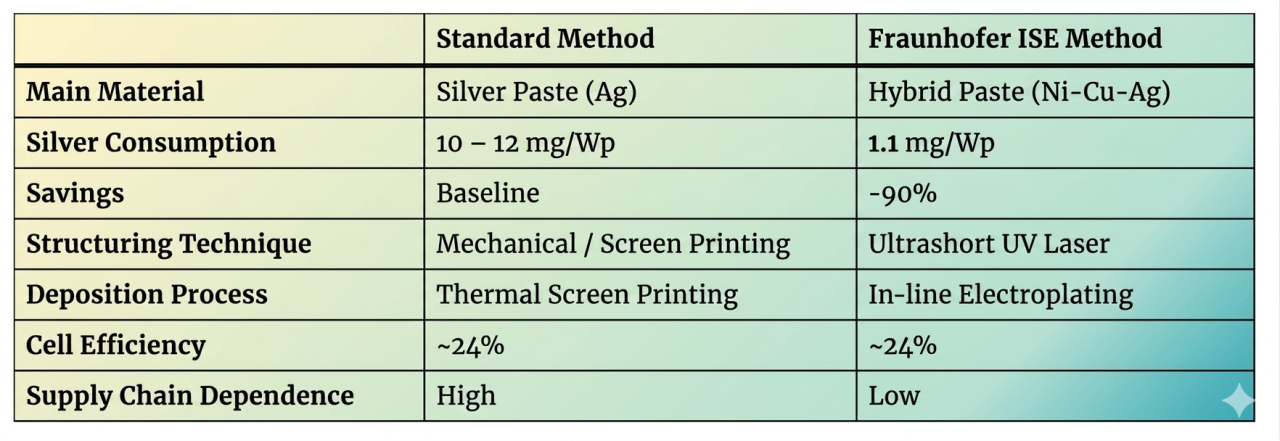
German scientists at the Fraunhofer Institute for Solar Energy Systems ISE have achieved a major milestone: developing low-silver TOPCon photovoltaic technology. The new approach reduces silver usage to just 1.1 mg/Wp, compared with the typical 10–12 mg/Wp required in conventional contacts.
The result is made possible by a new in-line metallisation process that preserves conversion efficiency while significantly lowering reliance on this critical raw material.
The cost pressure behind TOPCon solar cells silver reduction
This development comes at a pivotal moment for the photovoltaic industry. Manufacturers are rapidly replacing p-type Passivated Emitter and Rear Cell (PERC) technology with n-type Tunnel Oxide Passivated Contact (TOPCon) cells, driven by their higher efficiency potential.
However, this transition carries a structural drawback. TOPCon cells require screen-printed silver contacts on both sides, leading to 40–60% higher silver consumption compared with PERC.
Today, more than 50% of wafer-to-cell conversion costs in TOPCon production are linked to silver paste. With silver prices rising steadily since October 2025, currently hovering around 79 USD per ounce and peaking at 116 USD in January 2026, the urgency to reduce dependence is evident.
Beyond cost, supply constraints and long-term availability risks could further tighten the market, pushing module prices higher and ultimately increasing the Levelized Cost of Energy (LCOE).
Moving beyond screen printing with laser and electroplating
Industry research has long explored replacing silver with more abundant materials such as copper, aluminium, nickel, tin or zinc, typically retaining traditional screen-printing techniques.
Yet, applying these alternatives to silicon solar cells, particularly TOPCon, has proven challenging. By contrast, promising results have been achieved in other next-generation technologies, including heterojunction (HJT) and interdigitated back contact (IBC) cells.
How the hybrid metallisation process works
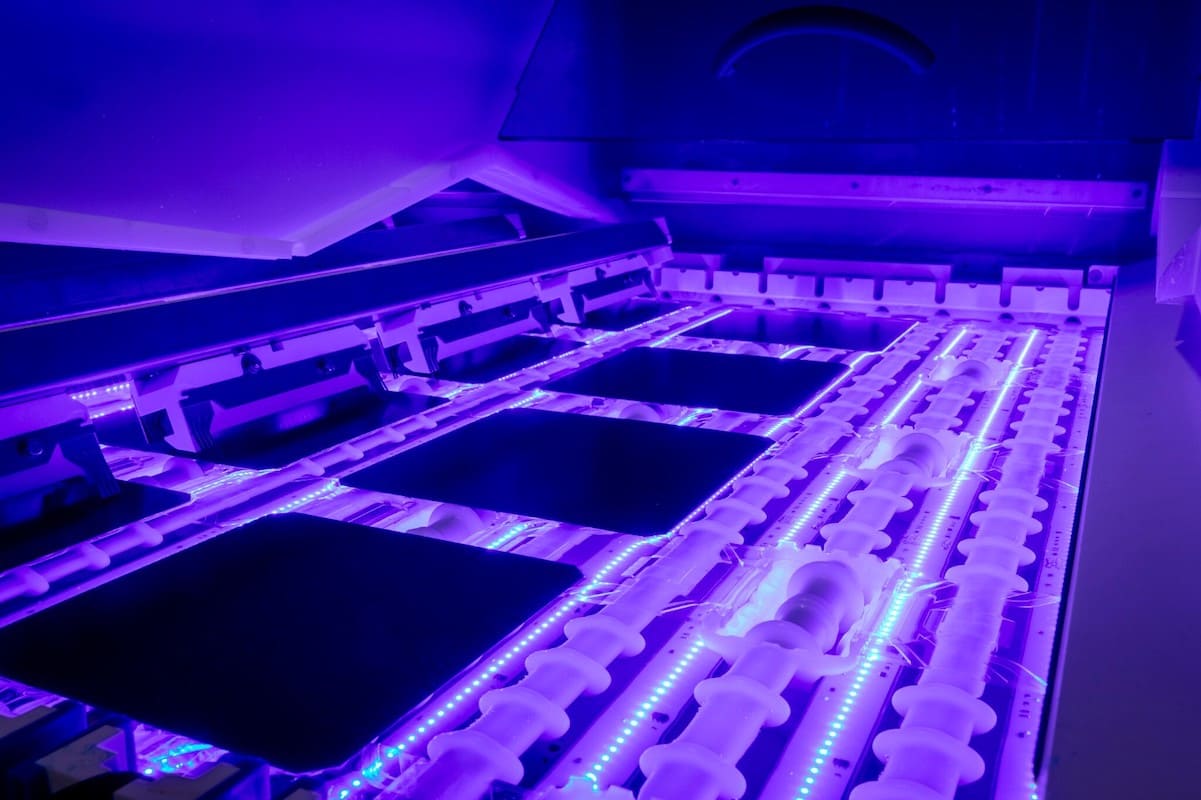
The Fraunhofer ISE team, in collaboration with RENA Technologies GmbH, has taken a different route, demonstrating both technical feasibility and industrial scalability of a hybrid process combining laser structuring and electroplating.
Specifically, the method integrates:
- Ultra-short pulse UV laser structuring, creating much finer grooves than screen printing
- Electrochemical deposition of a hybrid nickel-copper-silver stack
Each material plays a distinct role:
- Nickel acts as a diffusion barrier, preventing copper migration into the cell
- Copper ensures electrical conductivity
- Silver, used in minimal quantities, provides oxidation protection
Thanks to this configuration, silver content drops to just 1.1 mg/Wp, representing a 90% reduction compared with current standards.
Industrial validation and efficiency performance
The collaboration with RENA enabled testing on a real production line, manufacturing M10 solar cells with conversion efficiencies of 24%, in line with conventional silver-based contacts.
The team also achieved a fill factor of 82.1 ± 0.3% across a batch of 186 cells, alongside strong stability results in degradation testing under the IEC 61215 standard.
Strategic implications for Europe’s energy autonomy
Beyond cost and performance, the innovation carries important geopolitical implications. The new metallisation approach could reduce dependence on Chinese supply chains, as electroplating equipment and chemicals are largely sourced from European and US manufacturers.
At the same time, Fraunhofer ISE is working to establish resilient European supply chains for copper-based metallisation, reinforcing the continent’s industrial autonomy in photovoltaic manufacturing.