Why thin film solar cells struggle under shaded conditions
Shading remains one of the biggest challenges for photovoltaic systems. While all solar modules experience lower electricity output when part of the array is shaded, thin film solar cells face an additional issue: the risk of permanent damage that can compromise long-term operational stability.
This is particularly true for technologies based on cadmium telluride (CdTe), copper indium gallium selenide (CIGS), perovskite solar cells and organic solar cells. Until now, however, the electrochemical processes responsible for this degradation have not been fully understood.
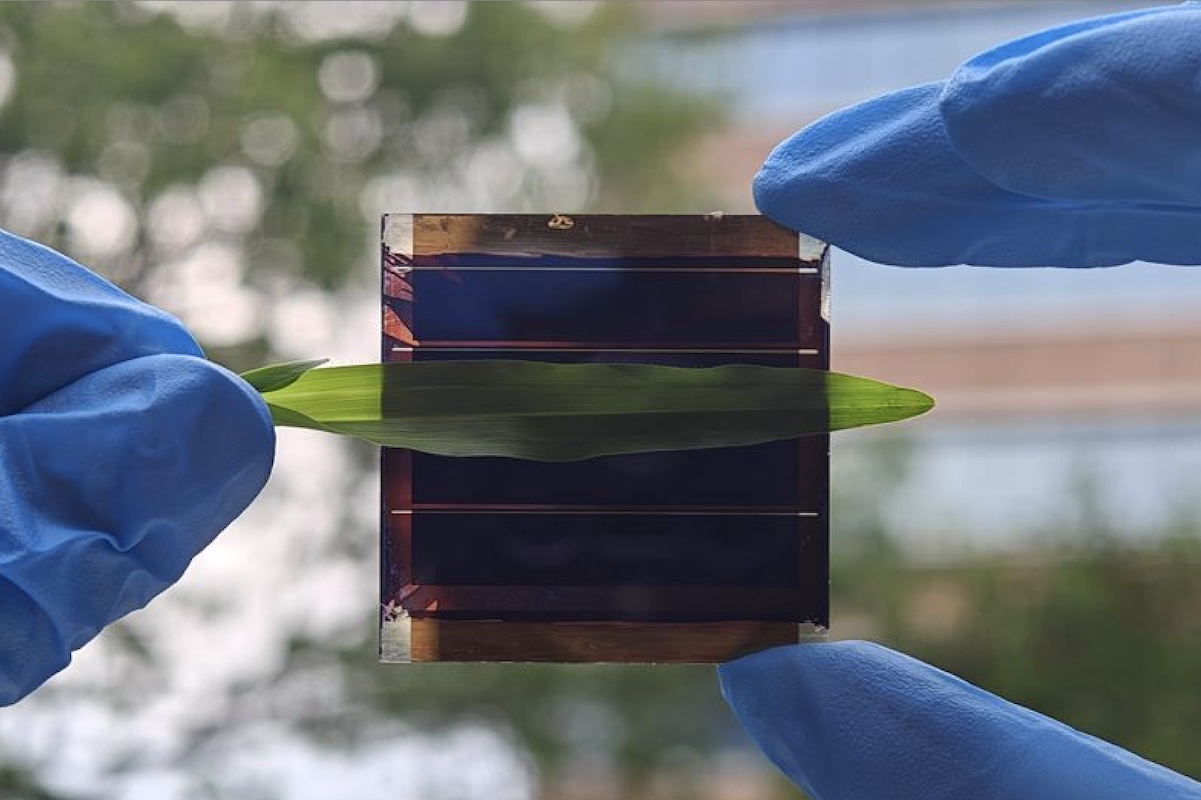
Researchers at the Hong Kong Polytechnic University (PolyU) have now addressed this knowledge gap by developing a perovskite-organic tandem solar cell specifically designed to withstand reverse-bias stress caused by shading.
How photovoltaic shading affects module performance
The impact of shading depends largely on the photovoltaic technology involved.
Previous research has shown that the power output of a conventional single-string photovoltaic module can fall by around 90% when a single solar cell becomes completely shaded. Besides reducing electricity generation, this can also trigger the well-known hot spot effect, where shaded cells dissipate heat instead of producing electricity.
Commercial silicon modules mitigate this issue using several established solutions, including bypass diodes, power optimisers, advanced string inverters and half-cell architectures.
Many of these approaches cannot easily be applied to thin film photovoltaics. Unlike crystalline silicon modules, thin-film panels are manufactured as a continuous coated layer in which microscopic material layers are deposited before being laser-scribed into individual cells. As a result, each semiconductor technology responds differently to shading.
Reverse bias remains the critical weakness
The PolyU research focused on organic and perovskite solar cells, two technologies that are particularly vulnerable to reverse bias.
According to the university, “when a solar cell is partially shaded and generates a negative voltage, maintaining stable performance becomes extremely difficult, and the device can even suffer permanent damage.”
Reverse bias occurs when a shaded cell develops a voltage opposite to its normal operating direction. Instead of generating electricity, the current flows backwards, forcing the affected cell to absorb energy and potentially causing irreversible degradation.
Although this phenomenon has long been recognised, the charge transport mechanisms responsible for reverse-bias degradation in organic solar cells have remained largely unexplored.
Professor Li Gang and his research team identified the underlying cause as defects known as deep trap states within the bulk heterojunction.
These microscopic defects trap electrical charges that would otherwise contribute to power generation, reducing conversion efficiency while accelerating material degradation under reverse-bias conditions.
Thin film solar cells achieve greater durability and efficiency
After identifying and minimising these deep trap states, the researchers successfully produced organic solar cells capable of withstanding irreversible breakdown voltages exceeding -35 V.
Building on this improvement, the team developed a perovskite-organic tandem solar cell in which the organic sub-cell effectively protects the perovskite layer from reverse-bias damage.
According to the university, “even after exposure to an extreme reverse bias of -40 V, the tandem devices retained more than 90% of their initial efficiency.”
The devices also demonstrated exceptional operational stability. After continuous operation at -20 V for 12 hours, they preserved more than 90% of their original efficiency. Even after 2,000 hours of continuous operation at -4.5 V, they still retained 97% of their initial performance, significantly outperforming existing thin-film photovoltaic technologies.
At the same time, the tandem architecture delivered a power conversion efficiency exceeding 26%, bringing the technology closer to the performance levels required for commercial deployment.
A step towards post-silicon photovoltaics
Beyond improving scientific understanding of reverse bias, the study represents an important advance in the durability of next-generation photovoltaic devices.
By substantially increasing the stability and operational lifetime of tandem devices, the research brings thin film solar cells closer to practical commercial applications. It also strengthens the long-term prospects for post-silicon photovoltaic technologies that could eventually offer lower manufacturing costs and a more geographically diversified supply chain.
The study, “Perovskite–organic tandem solar cells with superior reverse-bias stability“, was published in Nature Materials.