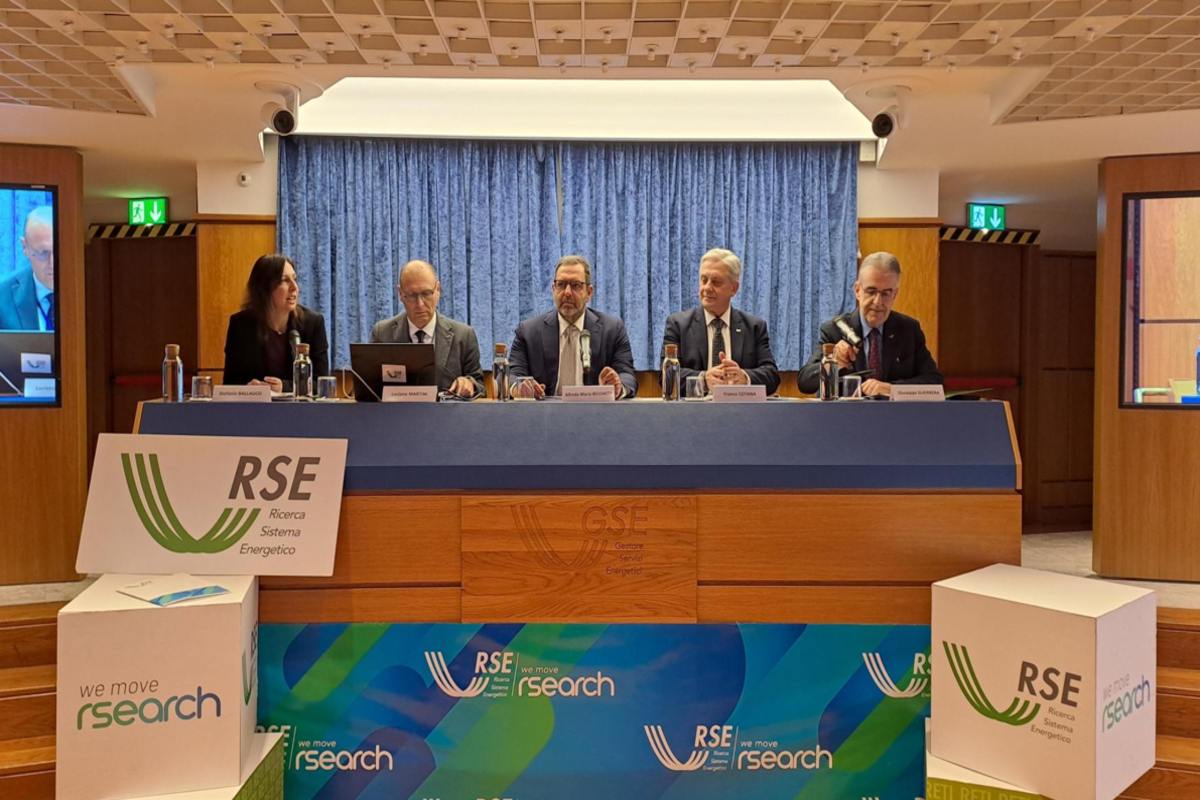
ISGAN Executive Committee returns to Rome after more than 10 years
The ISGAN Executive Committee, International Smart Grid Action Network, chaired by RSE, is reconvening in Rome after more than 10 years. It will be a week of workshops and strategic meetings for the development and implementation of smart grids. During the proceedings, insights into the European Commission’s Strategic Roadmap on digitalization and AI in the energy sector will also be previewed.
ISGAN is a global initiative comprising 26 Members, including 25 national governments plus the European Commission, spread across five continents. Italy, the United States, and South Korea founded it in 2011 as part of the Clean Energy Ministerial. ISGAN is formally recognized as a Technology Collaboration Programme (TCP) of the International Energy Agency (IEA). The initiative’s goal is to foster international cooperation for the development, dissemination, and integration of more efficient, secure, and sustainable electricity grids globally. ISGAN focuses on the evolution and security of the energy system and thus the progressive implementation of smart grid solutions.
The European Commission’s strategic roadmap on digitalization and AI in the energy sector
The introduction of artificial intelligence, for example, will allow for the optimization of grid transport capacity, balancing supply and demand and shifting excess energy into storage systems, thus avoiding imbalances between production and consumption. AI will enable the grid to have a sort of nervous system capable of reacting to external stimuli arising from changes in consumer habits or climate change.
The evolution of smart distribution grids depends on political, economic, technological, and social dynamics. Grid planning and implementation often face conditions of uncertainty related to policies and regulatory aspects that evolve over time. The needs for digitalization and the potential applications of artificial intelligence fit into this scenario of electricity system transformation.
In this regard, next week, during the ISGAN meetings in Rome, some previews of the “Strategic roadmap for digitalization and AI in the energy sector”, which will soon be published by the European Commission, will be shared.
The roadmap aims to accelerate the adoption of AI in the energy system, best managing the challenges this technology poses for the European electricity system in terms of both security and energy consumption. The European roadmap will specifically explore how AI can support the transformation of the energy system and how to best leverage large volumes of data for the development of smart energy services. The document will therefore be useful for flexible demand management and for overcoming the risks that AI can pose to critical energy infrastructures. It will also serve to promote international cooperation to disseminate reliable and secure artificial intelligence solutions for the energy sector.
The EU Commission has been working on the document for almost a year. The roadmap covers a constantly evolving sector and stems from the consideration that artificial intelligence must be exploited to reap all its benefits. Above all, the Commission aims at the use of generative AI, not predictive AI, which we already know. Generative AI, based on reliable data, is capable of estimating and providing useful suggestions for policy. Therefore, it holds crucial importance for Europe. Brussels wants to make its mark on how to manage AI to ensure it is an efficient and reliable tool for grid utilization.
The roadmap not only concerns the use of AI for the energy sector but also the ways in which the energy system can support AI, given the high demand for data processing from data centers. The document therefore reflects the European vision in this area. The aim is also to transfer the European approach to this matter abroad. ISGAN participated in the drafting of the roadmap, having reviewed the document.
Italy leads in electric system innovation
“Italy leads in electric system innovation, and with over two million generation points and more than 700,000 storage systems nationwide, it is essential for our country to ensure intelligent management of the electricity grid, including through the use of artificial intelligence,” explained RSE CEO, Franco Cotana, during the press conference held in Rome on March 11.
“In a scenario where annual electricity demand in Italy will grow from the current 315 TWh to over 650 TWh by 2050, it is crucial to identify and implement the necessary solutions for the system. Modern, digital, and smart grid infrastructures are the true enabler of the ongoing energy transition. Continuing to invest in innovation is key to maintaining a secure, flexible, and resilient electrical and energy system, capable of integrating ever-increasing amounts of intermittent renewable energy sources, such as solar and wind, reducing grid congestions, and ensuring lower energy costs over time for businesses and citizens,” Cotana added.
“The challenges are very similar for all countries, if not exactly the same: massive integration of non-programmable renewable generation and a push towards deep digitalization of energy systems while maintaining extremely high stability, availability, and security. The moment we are experiencing today is strategic for achieving the 2030 climate goals,” stated Luciano Martini, Director of RSE’s Generation Technologies and Materials Department and Chair of the ISGAN Executive Committee since 2019.