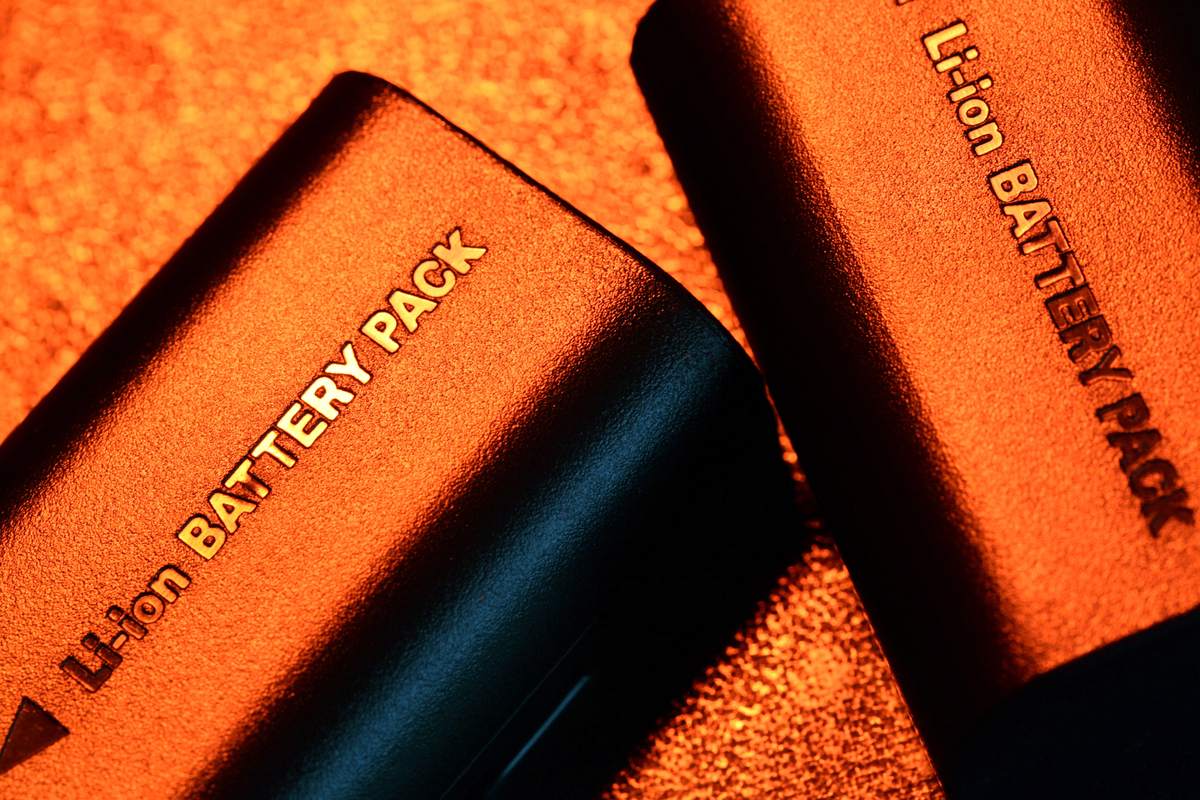
Lithium-ion batteries and the rise of China as a global leader
The global lithium-ion batteries market is now worth more than $150 billion. Yet its strategic importance extends far beyond its monetary value. Lithium-ion batteries have become essential to the automotive industry, electricity grids, data centres, drones used for defence purposes, robotics and a growing range of other sectors.
Why batteries are entering a golden age
This is a defining moment for lithium-ion batteries. Their geopolitical importance stems from the role they will play in determining the future competitiveness of the automotive industry, the operating time of drones and advanced robots, and the resilience of data centres facing massive and constant electricity loads.
This is why developing a domestic battery industry has become a strategic priority. Beyond their applications, batteries also require significant quantities of critical minerals such as lithium, cobalt and graphite. These resources have increasingly become a source of rivalry between major powers and a key target in the global race for raw materials.
Lithium-ion batteries: an international story
Research into lithium-ion batteries began in the aftermath of the 1973-1974 oil crisis, as the world’s leading crude oil importers sought ways to reduce their exposure to rising supply costs.
As highlighted in the International Energy Agency’s latest State of Energy Innovation 2026 report, the scientific foundations of lithium-ion batteries were established at universities and publicly funded laboratories in the United States, Europe and Japan. Even then, advanced batteries were seen as a way to electrify road transport, the largest source of oil demand, while storing electricity generated from renewable sources.
However, the technology’s first commercial breakthrough did not come from electric vehicles or energy systems. Japanese electronics companies were among the first to recognise its commercial potential. Manufacturers of portable electronic devices became the earliest customers for lithium-ion batteries because they were compact, lightweight and rechargeable. Electric vehicles subsequently emerged as their most promising application.
China’s lithium-ion batteries leadership was built over decades
In the early 2000s, China recognised that electric vehicles could provide a strategic route into a global automotive industry still dominated by European, Japanese and US manufacturers. Yet as late as 2010, Japanese and South Korean companies still led the global lithium-ion battery industry.
Today, the picture is radically different. China is the world’s largest producer and exporter of cars. It accounts for 70% of global electric vehicle production and 85% of lithium-ion battery production. The world’s largest electric vehicle fleet is also located in China.
As a result, in 2025 the country avoided close to one million barrels per day of oil consumption, equivalent to around 13% of the transport oil demand it would otherwise have recorded that year. China did not reach this position overnight. Its success is the result of decades of industrial policy and measures designed to support demand.
By 2030, China alone could have enough production capacity to meet the entire world’s battery demand. Chinese companies also hold almost 70% of battery patents worldwide and are moving rapidly to secure control over next-generation technologies offering better performance or requiring fewer minerals.
China’s experience, according to the IEA, demonstrates that large and predictable demand is crucial to the industry. State support has taken many forms over the years, but creating the foundations for such a large and competitive electric vehicle market has been the government intervention with the greatest impact.
Building a strong battery industry requires integration
Competing in lithium-ion batteries requires both scientific excellence and large-scale, high-precision manufacturing. According to the International Energy Agency, developing a genuinely competitive battery industry and diversifying global supply chains requires sufficiently large and predictable demand, patient capital and sustained, long-term political commitment. Targeted support for companies may also be useful.
However, the IEA also stresses that today’s environment is markedly different from the one in which China’s battery manufacturing industry expanded. Large markets can still create opportunities for new players, but competition is considerably stronger and manufacturing processes are becoming increasingly complex.
Technological innovation is also accelerating. In 2023, battery-related patents accounted for 40% of all energy patents, a share never previously reached by a single technology in the energy sector.
According to the IEA, attracting investment and establishing partnerships with leading Asian battery manufacturers has proved effective in the past and remains a viable strategy for accelerating the development of Western industrial ecosystems.
The first lithium-ion battery industries in North America and Europe were established through partnerships with Japanese and South Korean companies. Leading South Korean, Chinese and Japanese groups still operate most battery manufacturing capacity in both regions.
Can lithium-ion batteries markets become more balanced?
An analysis published by the independent think tank Carnegie Endowment for International Peace similarly argues that a more balanced market would require deeper industrial integration and greater supply chain coordination between the United States, Europe, South Korea and Japan. India and Canada could also have a role to play.
China will inevitably retain a substantial competitive advantage. However, strengthening non-Chinese competitors could help create a more balanced market and prevent China from establishing an effective monopoly over the battery industry.
On the demand side in the United States and Europe, governments should encourage joint ventures between domestic start-ups and South Korean industrial groups with the expertise needed to scale up manufacturing.
The United States and Europe have considerable battery innovation capabilities, but often struggle to bring these technologies to market at industrial scale. This is precisely why cooperation with South Korean companies, as well as the remaining major Japanese players, is so important. Japanese manufacturers that once led the global market have progressively lost ground.
Furthermore, the United States and Europe have built battery cell factories producing the final-stage product, but remain heavily exposed in the midstream segment, particularly in active materials made from critical minerals.
Addressing this second vulnerability should be a priority for governments. Western policymakers should consider supporting Asian companies, including Chinese groups, in scaling these processes through joint ventures.
US policy uncertainty and the debate over “de-risking”
The analysis also points to the uncertainty surrounding Washington’s policy direction as a source of concern among longstanding US allies and partners. This helps explain why many are increasingly looking towards China.
Building a diversified industrial base is a sound long-term strategy, but doing so becomes difficult when countries lack mutual trust. Europe has placed significant bets on a small number of battery start-ups that lacked industrial experience and have since either failed or struggled to survive.
As these companies falter, Chinese manufacturers are seeking to establish themselves in the European market without joint ventures. This leaves policymakers facing a fundamental question: what should “de-risking” actually mean in practice?