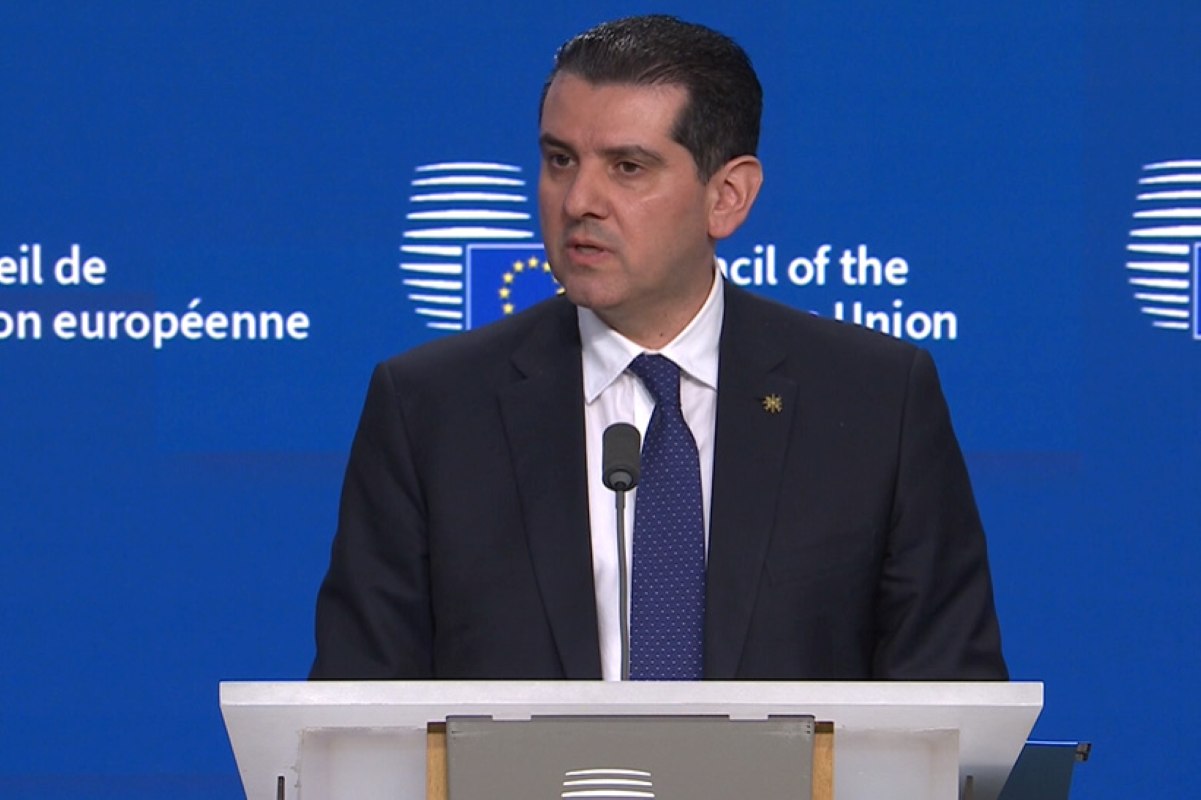
Political clash ignites at European Energy Council over ETS and energy prices
The energy grid package discussed yesterday at the European Energy Council revealed an increasingly explicit political confrontation over energy price management and the ETS’s role in shaping energy costs, with Italy at the forefront of calls for its suspension.
Behind the formal consensus on grids, a rift between member states is emerging: on one side, countries demanding structural adjustments to contain prices, and on the other, those defending the current market framework and the ETS system.
The debate unfolded along two parallel tracks—infrastructural and regulatory—but it is on the latter that the most evident tensions are concentrated, further fueled by the recent rise in energy prices linked to geopolitical dynamics.
The positions expressed reveal a scenario where the energy transition is no longer just a technological or industrial issue but a terrain for economic negotiation among different national models.
Italy, Czech Republic, and Estonia push for ETS and energy prices reform
The most explicit front in demanding a revision of European instruments is led by Italy. Minister Gilberto Pichetto Fratin brought to the Council a position built around the link between ETS and electricity prices.
In the discussion with France, the Czech Republic, and Estonia, the minister stated that “Europe must maintain high climate ambition, avoiding rigidities that risk penalizing families and businesses. For Italy, this is a strategic priority.” The Italian request focuses on a revision of the ETS system that limits its impact on prices, reduces quota volatility, and contains speculative phenomena.
According to the minister, the price of emission allowances continues to be transferred to the marginal electricity price, amplifying the effects of tensions in the gas market. For Italy, this mechanism risks compromising industrial competitiveness and generating an excessive transfer of costs to final consumers.
The Czech Republic and Estonia shared concerns about the economic impact of the ETS, emphasizing the need to avoid distortions in national markets and ensure an economically sustainable transition.
France and Nordic countries defend the market at the European Energy Council
France and the Nordic European countries held a different position, maintaining a more cautious approach in the debate regarding structural modifications to the ETS. French Minister Maud Brégon acknowledged the critical nature of pricing but insisted on the need to preserve the stability of the regulatory framework, avoiding interventions that might weaken the price signal necessary for decarbonization.
Nordic countries reinforced this stance, highlighting that the functioning of the electricity market and the ETS system is a central tool for guiding investments in low-carbon technologies. The focus was rather on the need to strengthen existing market instruments, such as long-term contracts, and to improve the integration of renewables through infrastructure development.
This position reflects a different structure of national energy systems, which are less exposed to gas volatility and more advanced in integrating renewable sources, and thus less sensitive to the immediate effects of emission prices.
Delays in grid updates
While the Council shows divisions on the ETS and prices front, a broad convergence emerges on infrastructure. The EU energy grid package is recognized by all member states as a necessary condition to support the transition and improve the functioning of the internal market.
Current grid capacity is not adequate to manage the increase in renewable production and electricity demand. European electricity interconnectors are indicated as a key tool to reduce congestion and promote price convergence between market zones.
However, operational criticalities also emerge on this front. Several member states have reported delays related to authorization procedures and difficulties in cross-border coordination. Central and Eastern European countries insisted on the need to bridge infrastructural gaps, while Nordic countries emphasized adapting grids to offshore production.
Europe’s energy prices still exposed to gas and ETS mechanisms
The topic of energy prices in Europe transversally crosses the entire debate. The Council highlights that the European system remains highly exposed to the price of gas and the cost of emissions, with a direct transmission of these factors to electricity prices.
The recent geopolitical crisis has accentuated this dynamic, bringing the issue of volatility back to the center of the political agenda. Italy stressed that “we cannot afford for the cost of ongoing geopolitical tensions and the transformation crisis to fall disproportionately on citizens,” highlighting the need for coordinated intervention at the European level.
The confrontation between member states thus shows a tension between two approaches: on one side, those who consider the current market still valid and improvable, and on the other, those who believe it is necessary to intervene in the basic mechanisms to avoid distortive effects.
European competitiveness behind the clash at the European Energy Council
Behind the technical debate on grids and ETS, a broader issue related to European industrial competitiveness is visible. Countries most exposed to energy costs, including Italy, raise the issue of the economic sustainability of the transition as a political priority.
The highlighted risk is that a high and volatile level of energy prices could impact companies’ ability to compete in international markets, particularly in energy-intensive sectors.