2026 energy crisis puts Europe under growing pressure
The 2026 energy crisis could prove even more severe than the shock experienced in 2022, while Europe is still struggling to coordinate an effective response. This year, 25 countries have already spent €17.9 billion on fiscal measures to cushion rising oil and gas prices, increasing public debt without delivering lasting results and, in some cases, exacerbating social inequalities.
Although the EU is not currently facing an imminent supply crisis, energy prices are creating an increasingly worrying situation for the most vulnerable households. Since the end of February, gas prices have risen by 140%, while diesel prices have doubled. For the 17% of the EU population living in energy poverty, more than 76 million people, this could mean being unable to afford adequate heating or even the cost of travelling to work.
This represents a substantial share of European households, most of which have not benefited from specifically targeted measures.
The IMF warning on broad energy subsidies
Yet the International Monetary Fund had already warned against such an approach.
“We believe support should adapt to the severity of the shock, consider alternatives to reach specific segments of the population and recognise that energy and food shocks are different,” Rodrigo Valdes, the IMF’s new head of fiscal affairs, said in April. “Only in the absence of viable alternatives should measures that weaken price signals be considered, but these should not turn into outright price freezes.”
Attention is now turning to the European Council meeting on 15 and 16 October, when EU leaders are expected to address soaring energy costs. In the meantime, European Commissioner Dan Jørgensen has called for greater energy restraint.
What Europe needs is a coordinated and collective response that can also reflect the different circumstances of individual Member States.
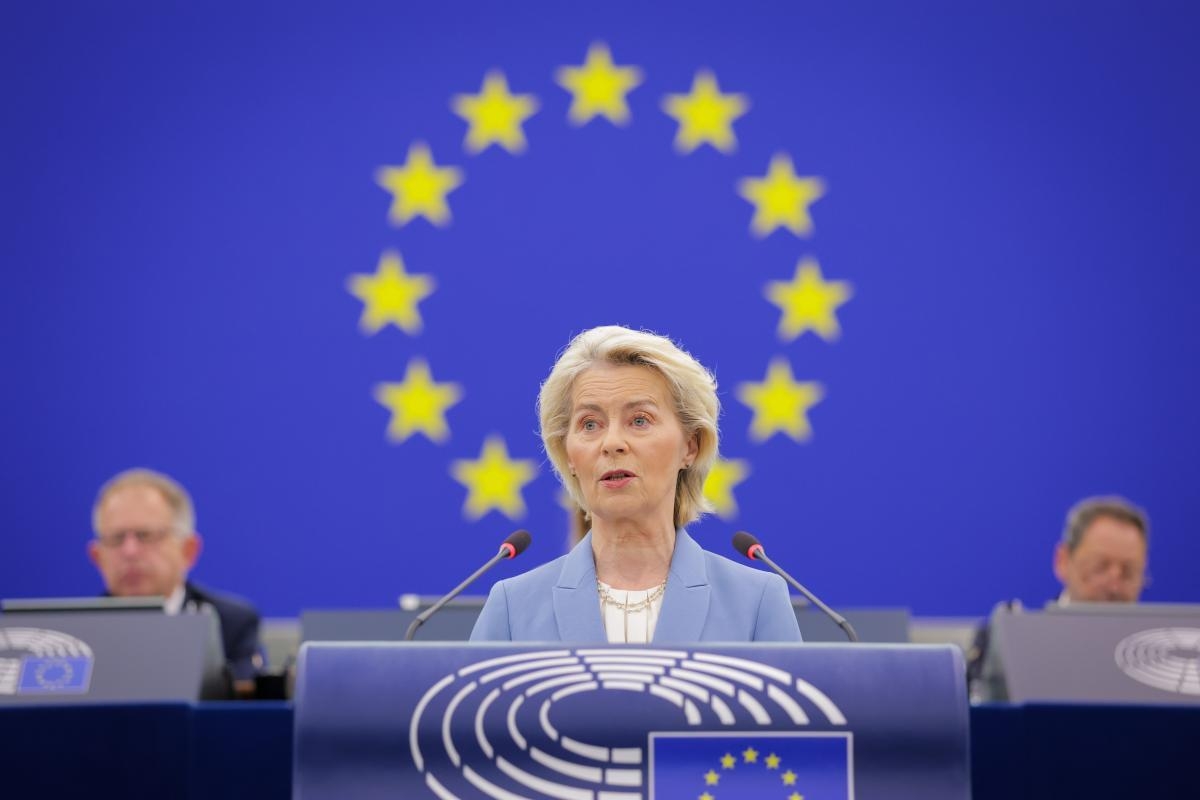
“We know that the energy challenges are not the same across the European Union, because every Member State has a different energy mix. So there is no one-size-fits-all solution,” European Commission President Ursula von der Leyen told the European Parliament’s plenary debate ahead of the upcoming Council meeting. “Our role is to provide Member States with the tools and flexibility they need to respond.”
Targeted support during the 2026 energy crisis
While Brussels remains cautious over proposals such as a windfall tax on energy companies, it appears more determined on other measures.
“We have introduced a temporary State aid framework for the most exposed industrial sectors, which we will extend. And we have outlined options to help the households most in need. What is very important is that support must be targeted: there must be no indiscriminate subsidies, because that would increase demand, benefit higher incomes and entail enormous costs.”
The European Commission is also preparing to launch a strategic dialogue on refineries, led by Commissioners Dan Jørgensen and Andrius Kubilius, with the aim of reducing costs and ensuring secure energy supplies, including those required for defence.
EU plans demand aggregation and joint energy purchasing
To overcome fragmentation among Member States, the Commission will also establish a demand aggregation task force. The objective is to build on the model introduced in 2023 with AggregateEU for gas, while taking it a step further.
“When Russia tried to blackmail us, we brought European buyers together. We pooled demand. We helped secure the supplies Europe needed. So it is a model that works, but we need to take it to the next level. We want to move from simply matching demand and supply to aggregating demand by entrusting a market operator to carry out joint purchases for all of us.”
Renewables and grids are key to easing the energy crisis
Addressing the worst effects of the 2026 energy crisis, however, will require more than emergency measures. Von der Leyen stressed that around 480 GW of new renewable energy capacity is currently at risk of being wasted because projects are waiting for grid connections, making the adoption of the EU grids package by the end of the year increasingly urgent.
At the same time, the Commission President called for faster electrification, pointing to the recently announced Action Plan, under which the EU could save around €260 billion a year on fossil fuel imports.
“Therefore, in the coming months we will put forward the measures needed to achieve this objective. Because every electron of clean energy that we produce and use here in the European Union is energy that we do not have to import from volatile global markets.”