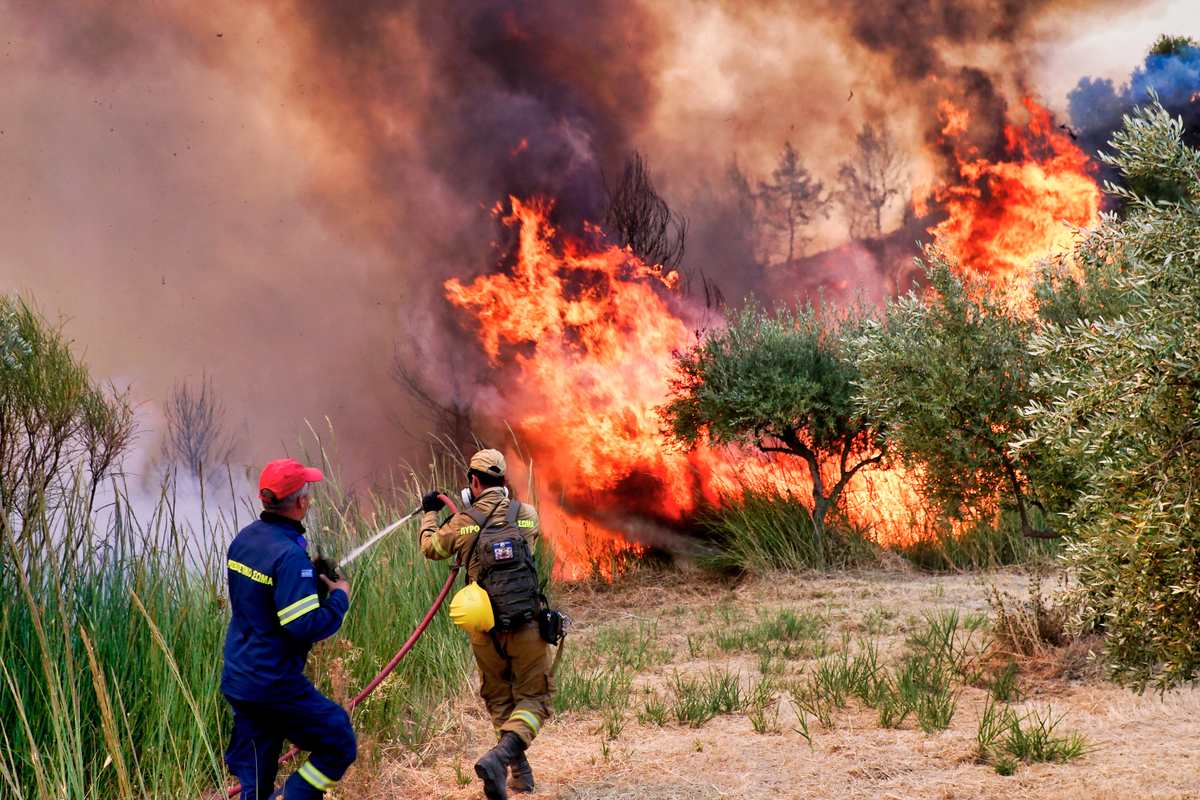
Wildfire risk Europe reaches unprecedented levels
Rising temperatures are intensifying the weather conditions that favour wildfires across southern Europe. According to a new study published in Scientific Reports, the number of summer days with conditions that encourage wildfire ignition, rapid spread and high fire intensity has more than doubled across large parts of the Iberian Peninsula, France, Italy and Greece since 1981.
The findings indicate that a warmer and drier climate is significantly increasing wildfire risk Europe, despite the fact that the total number of fires has declined since the 1980s.
Recent wildfire seasons across southern Europe, including the record-breaking summer of 2025, have demonstrated that the scale and intensity of major fires are increasingly exceeding firefighting capabilities. According to the researchers, the region has entered an era of extreme wildfire risk, highlighting the urgent need to better understand the drivers behind this growing threat.
Researchers analysed more than four decades of wildfire data
The research team examined national wildfire records from Portugal, Spain, France, Italy and Greece alongside meteorological and climate data covering the period from 1981 to 2025.
Their analysis found that, in parts of France and Spain, the intensity of the weather conditions most conducive to large wildfires, characterised by hot, dry and windy conditions, increased by as much as 50% during 2016-2025 compared with the 1981-2010 baseline.
The number of days with highly favourable wildfire conditions also rose substantially. In some regions, summers that once experienced fewer than ten high-risk days between 1981 and 2010 now experience as many as 25 days under similar conditions.
Wildfire risk Europe is also linked to El Niño
The study shows that weather conditions favourable to wildfires have intensified dramatically across southern Europe, reflecting broader shifts in regional temperature and rainfall patterns.
Researchers also identified a relationship between year-to-year variations in wildfire risk Europe and the El Niño Southern Oscillation (ENSO), suggesting that large-scale climate variability is placing increasing pressure on wildfire activity throughout the region.
Climate change is increasing the probability of severe wildfires
The findings indicate that climate change is making the combination of conditions that drive severe wildfires increasingly likely, as recently observed in France and Spain.
Across western Europe, the transition from a wet winter to an exceptionally dry spring is becoming one of the most important factors influencing wildfire danger. A recent attribution study found that climate change is increasing the likelihood of severe drought through higher atmospheric evaporative demand.
Above-average winter rainfall followed by exceptionally dry spring conditions has been identified as the primary driver behind the devastating wildfires that affected the Iberian Peninsula during 2025.
Exceptional heat and drought continue across Europe in 2026
As highlighted by Copernicus, Europe has so far experienced an exceptionally hot and dry summer in 2026.
Between April and June, large areas stretching from Portugal to Finland recorded below-average rainfall. Successive heatwaves further intensified drought conditions across much of the continent, contributing to severe wildfires, particularly in Spain and France, where 116,000 hectares and 42,000 hectares of forest have already burned respectively.
Current heat and drought levels are among the most severe recorded in recent years. Although western Europe experienced a relatively wet start to the year, persistent rainfall deficits in eastern Europe have triggered multiple forms of drought across the continent.
Current forecasts indicate only limited improvement in the short term, suggesting that elevated wildfire risk is likely to persist throughout the remainder of the fire season.