 Add Rinnovabili to your Google favorites
Water stress and hydrogen production: How much water does electrolysis need?
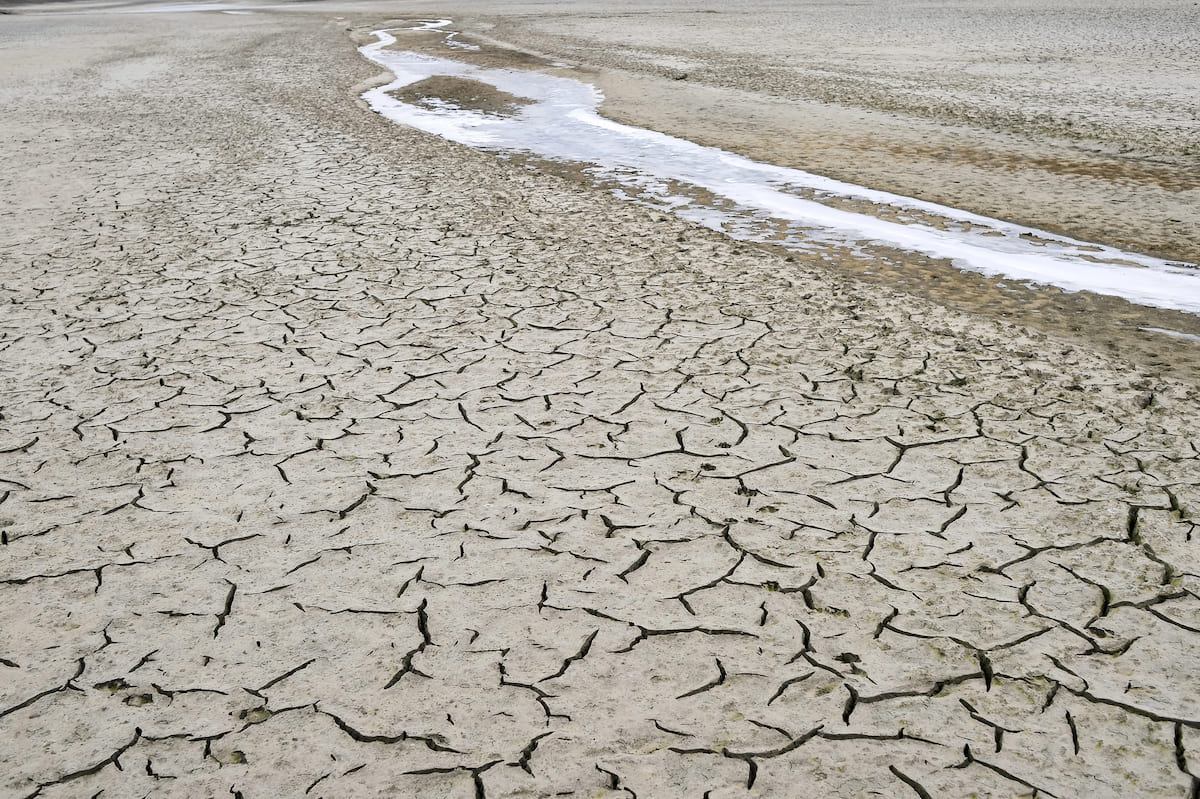
Climate change is putting increasing pressure on Europe’s water resources and supply security. With water stress affecting 20% of the region each year, improving resilience is becoming increasingly urgent. That also means rethinking the relationship between water and energy, not only in conventional power generation, including hydropower, nuclear power and fossil fuel-fired thermal plants, but also in the emerging green hydrogen production sector.
Electrolysis requires a significant amount of water to operate, preferably freshwater, to prevent salts from damaging equipment, and water that is as pure as possible. This inevitably raises questions about the future water demand associated with hydrogen production in Europe.
Currently, PEM electrolysis (Proton Exchange Membrane) is the most water-efficient technology, consuming an average of 17.5 liters of water per kilogram of hydrogen produced. Of that amount, 51% is used directly in the electrolysis process, while the remaining 49% is used for cooling.
The European Union’s Hydrogen Strategy sets a target of approximately 40 GW of electrolyzer capacity by 2030, equivalent to 10 million metric tons of renewable hydrogen production, although whether that target is achievable remains an open question. Based on those figures, future water consumption can be readily estimated.
Assuming that only PEM electrolysis is used by 2030, water consumption would reach approximately 175 billion liters. That would represent a very small fraction of Europe’s water resources, between 0.15% and 0.18% of annual freshwater demand. The figures would rise slightly if other electrolysis technologies were included in the calculation.
In the case of alkaline electrolysis, total water consumption is higher, typically ranging from 21 to 24 liters per kilogram of H₂. With solid oxide electrolysis, consumption ranges from 11 to 17 liters per kilogram of H₂.
Of course, freshwater is not the only available source. Much of the industry’s research is focused on bringing hydrogen production to the sea, either by adapting electrolytic cells or integrating desalination systems into production facilities. For now, this option has yet to move beyond the experimental stage, but it represents a particularly attractive opportunity, and not only in terms of water consumption.
It is worth noting that gray hydrogen production involves considerably higher water consumption. A conventional steam methane reforming plant requires approximately 20 liters of water per kilogram of H₂, a figure that can rise to 29.8 liters per kilogram when carbon capture and storage systems are added.
Freshwater demand from European hydrogen production
Using these estimates as a starting point, the European Commission’s Joint Research Centre (JRC) calculated the future pressure on water resources, publishing its findings in the report Spatial assessment of the impact of hydrogen production on European freshwater resources.
“A rough estimate shows that the equivalent of 0.08% to 0.12% of Europe’s annual freshwater demand will be needed to meet the REPowerEU hydrogen targets for 2030,” the report states.
“Similarly, the more ambitious scenario outlined by the Clean Hydrogen Joint Undertaking projects that achieving 67.5 million metric tons of renewable hydrogen production by 2050 would require the equivalent of 0.57% to 0.82% of Europe’s annual freshwater demand.”
While the total volume required at the continental level does not present a major concern, locating production facilities in specific areas already experiencing severe water stress could prove challenging.
To assess the scale of this potential challenge, the JRC also examined the associated risks, particularly in regions where freshwater resources are already limited.
Water stress: Where hydrogen production could worsen shortages
The study presents several noteworthy findings.
According to the researchers, the number of hydrogen production sites in Europe is expected to rise from 404 operational facilities in 2023 to 1,162 by 2030. Under the pessimistic climate scenario, approximately 7% of these facilities would operate in river basins experiencing significant water stress. By contrast, the remaining 91% would be located in areas facing minimal pressure.
Even so, placing some projects in regions already affected by structural water scarcity could pose a problem.
The report identifies Spain, northern Italy, Greece, Portugal and specific river basins in south-central France, where water resources are already under pressure from agriculture, population density or climatic conditions.
In these areas, water demand from hydrogen production will not be the primary cause of scarcity, but it could exacerbate existing local water shortages.