Climate disinformation: new funding for research and protection for scientists
Spain is expanding its action plan against climate disinformation. The initiative, announced at the beginning of 2026, is now being reinforced with a €3.5 million funding programme designed to support research, alongside the creation of a Unidad de Apoyo a la Verificación, or Verification Support Unit, to assist fact-checking organisations.
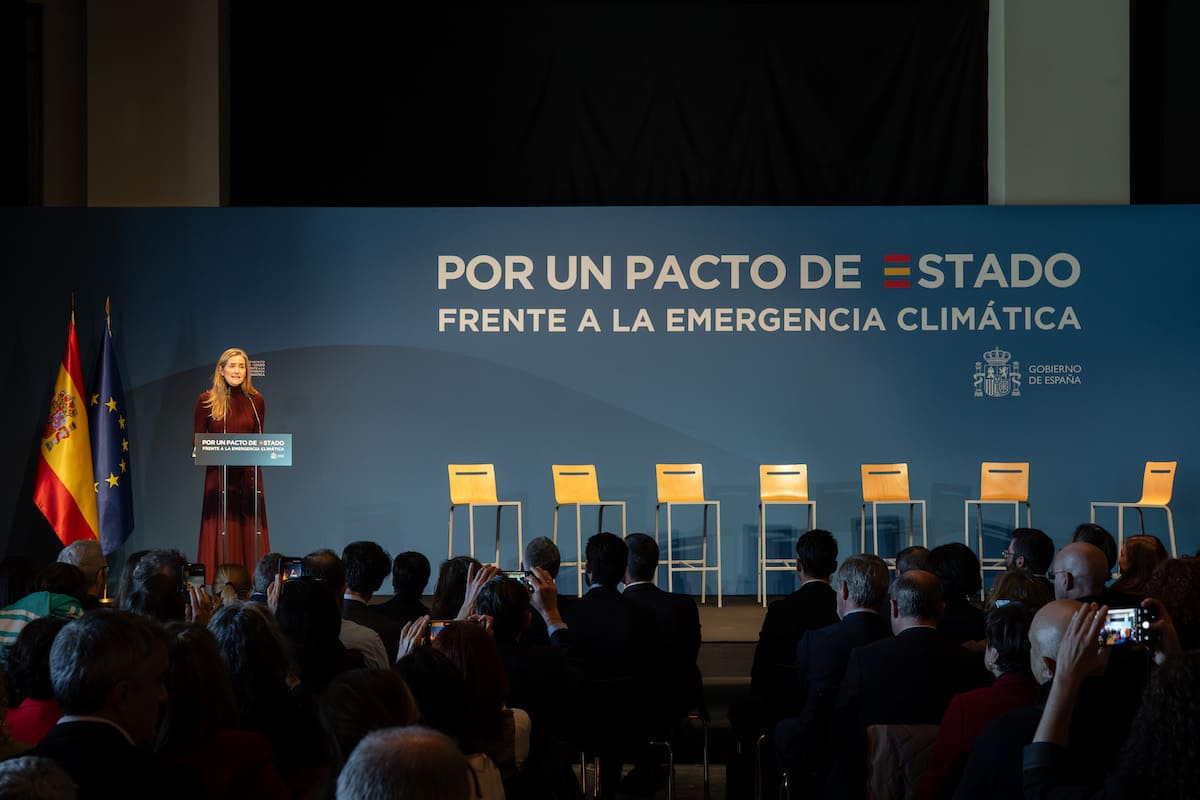
“The fight against disinformation is a priority for this government,” Sara Aagesen, Spain’s Deputy Prime Minister and Minister for the Ecological Transition and the Demographic Challenge, said in February 2026. “We have never had so much scientific information and knowledge about climate change at our disposal, yet never before have messages about the climate emergency, biodiversity, nature-based solutions or anything related to the green agenda been attacked on such a massive scale.”
Why climate disinformation is spreading
The problem extends far beyond Spain, as demonstrated by the many headlines published in Italy in recent years that have sought to ridicule global warming and climate activists.
Over recent decades, the debate around climate change has increasingly moved away from its scientific foundations, creating more space for speculative rhetoric. The complexity of the subject, combined with fake news, political polarisation and the instrumental use of media, has contributed to climate science being perceived as divisive and controversial rather than as a robust and widely established field of research.
This has helped fuel a new wave of climate denial capable of challenging even increasingly visible evidence. The impacts of global warming are now unfolding much as scientists had projected. Yet as heatwaves become more intense, storms more destructive and floods more frequent, digital disinformation continues to amplify scepticism. It encourages the perception that climate policies are, at best, ideological impositions and, at worst, part of a conspiracy threatening the global economy.
Challenging these beliefs is difficult, both because of the emotional dimension of the issue and because the algorithms underpinning social media platforms tend to confine users within their own information bubbles.
But tackling climate disinformation is also essential. It is necessary to restore trust in scientific research and to give societies a realistic chance of responding effectively to ongoing climate change.
As Aagesen stressed, “without a detailed understanding of what we are facing, we will not be able to contain this scourge [climate change]”.
Spain’s plan against climate disinformation
Against this backdrop, Spain’s new grant programme aims to promote multidisciplinary research and counter climate scepticism by strengthening scientific literacy, critical thinking and the public’s ability to identify reliable sources and interpret scientific evidence.
The funding call, published today, is open to public universities and public research organisations and will be managed by the Biodiversity Foundation.
Aagesen also announced that her ministry, together with the Ministry of Science, Innovation and Universities, will establish a support office for scientific staff. One of its objectives will be to provide specific protection for researchers facing attacks from climate denial groups.
Once again, Spain is positioning itself as an example of how public institutions can respond to the growing challenge of climate disinformation.