Rare earth recycling moves into industrial scale in Italy
Old hard drives, electric motors, household appliances and obsolete screens contain a hidden source of strategic materials that are becoming increasingly vital to the global economy. These devices are rich in rare earth elements, metals that underpin modern technologies but whose mining and refining remain overwhelmingly dominated by China. Developing an independent European supply of these critical materials is therefore a strategic priority, making the approval of Europe’s first industrial-scale rare earth recycling plant for waste electrical and electronic equipment (WEEE) a significant milestone.
Developed under the LIFE22-ENV-IT-INSPIREE project, the facility will be built in Italy after receiving authorisation from the Italian Ministry of the Environment and Energy Security (MASE). The approval follows a lengthy coordination process with the relevant public authorities and the completion of all required permitting procedures.
“With this authorisation, we are taking a strategic step for the country’s industrial future,” said Deputy Minister Vannia Gava. “Securing supplies of critical raw materials means strengthening our industrial, energy and technological autonomy. Recovering rare earths from WEEE is not only an environmental challenge, but also an industrial policy choice aimed at reducing external dependencies and making Italy more competitive.”
Why rare earths are strategically important
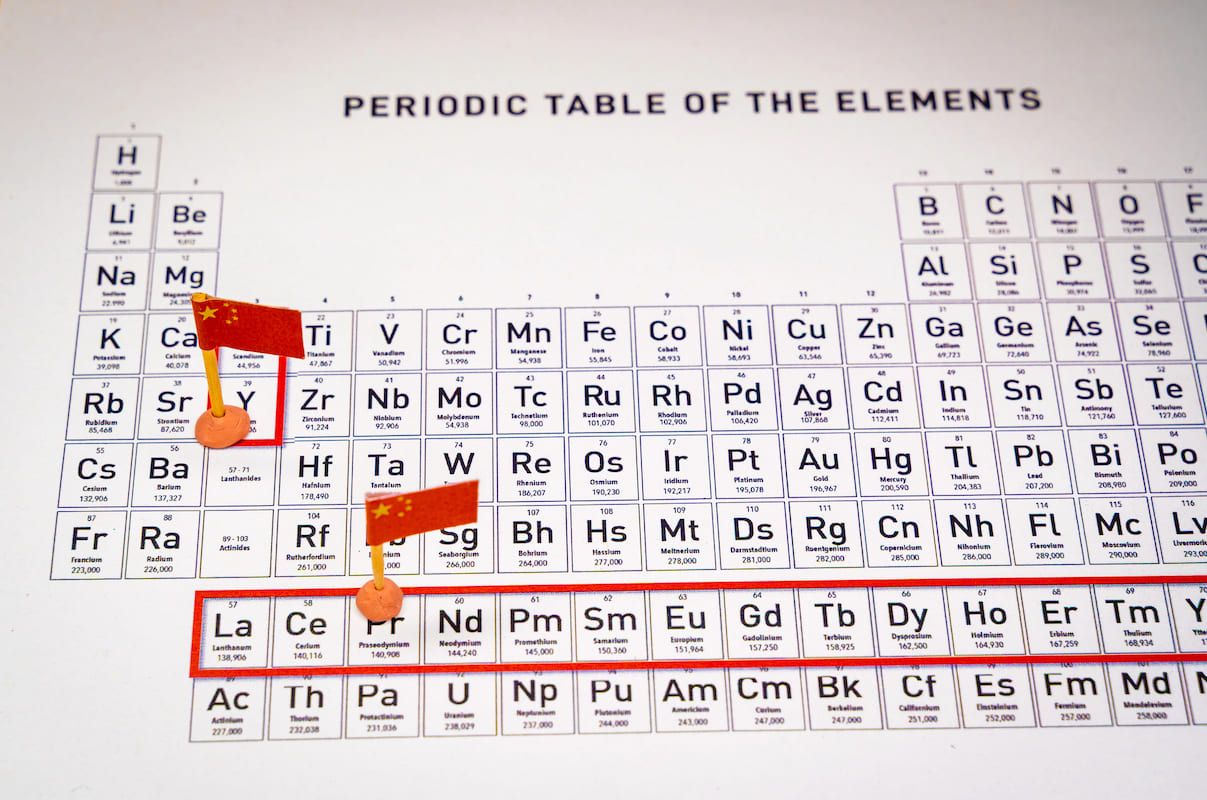
Despite their name, rare earth elements are not particularly rare in terms of geological distribution. The group comprises 17 chemical elements, many of which are relatively abundant in the Earth’s crust. What is rare, however, is finding economically viable deposits or extracting these elements in pure form.
Their strategic importance stems from their essential role in a broad range of advanced technologies, including renewable energy systems, transport, artificial intelligence, aerospace, medical equipment and defence applications.
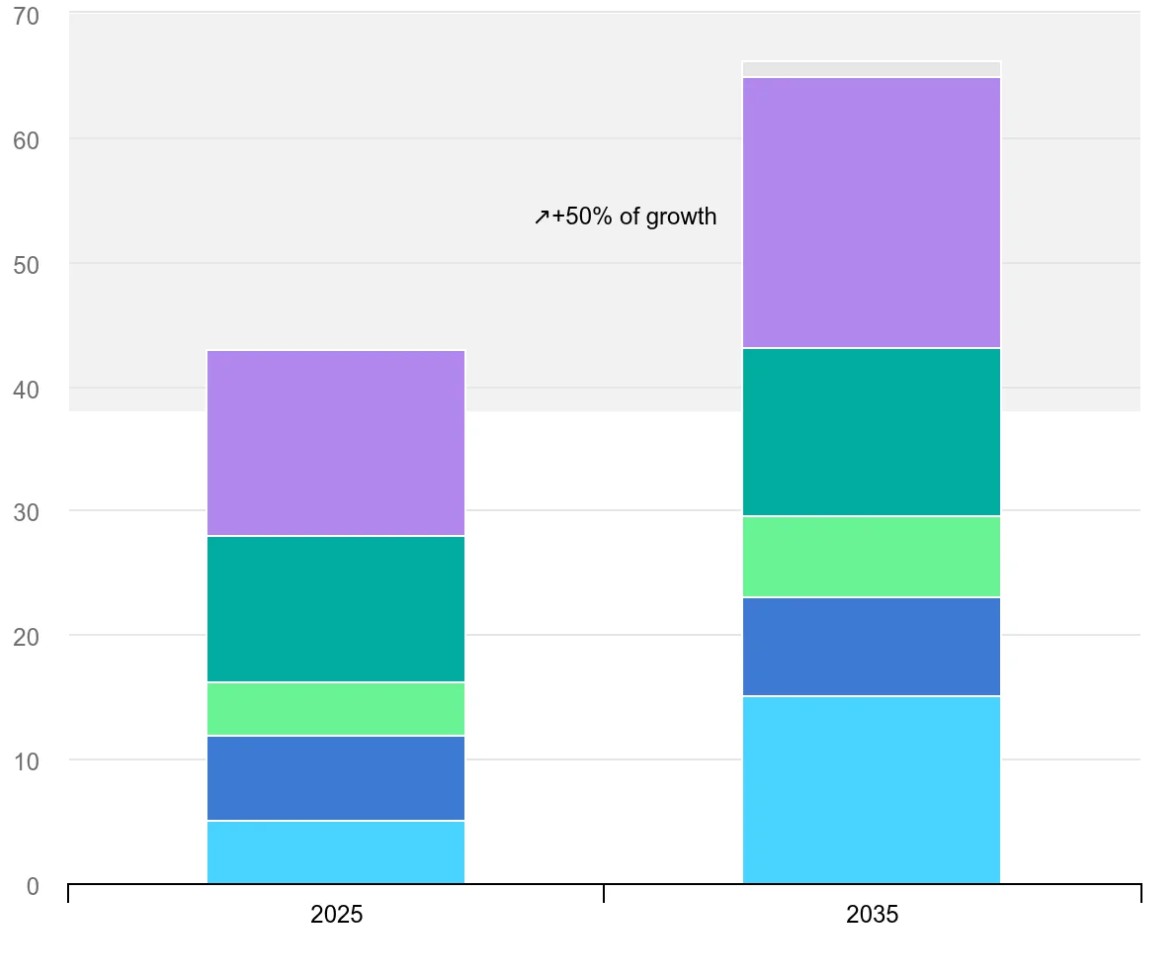
Permanent magnets account for the largest share of demand, representing around 95% of the total value of the rare earth market.
“High-performance neodymium-iron-boron (NdFeB) magnets, primarily composed of neodymium and praseodymium, often with dysprosium and terbium added to enhance performance, are among the most powerful permanent magnets available,” explains the International Energy Agency (IEA). “These magnets are essential components in a wide range of critical technologies, including electric vehicles (EVs), wind turbines, industrial motors and AI data centres.”
They are also widely used in MRI scanners, smartphones, household appliances and robotic servo motors.
China still dominates the global supply chain
According to the IEA, rare earths remain among the most geographically concentrated critical minerals across the entire value chain. China continues to dominate every stage of production.
In 2024, the country accounted for around 60% of global rare earth mining and an overwhelming 91% of global refining capacity.
This concentration has become a growing concern as Beijing has progressively tightened export controls. In April last year, China introduced restrictions on exports of seven heavy rare earth elements, related compounds and permanent magnets, causing exports to fall sharply and creating serious supply challenges for Western automotive manufacturers.
Although exports partially recovered, new restrictions announced in October 2025 created further uncertainty. China has currently suspended these export controls for one year, but if they were fully reinstated, both Europe and the United States, the regions most exposed to supply disruptions, could each face direct economic losses exceeding $1.5 trillion.
Rare earth recycling offers Europe an alternative supply
Against this backdrop, diversifying supply chains has become both urgent and essential.
Several mining, refining and magnet manufacturing projects are currently under development outside China. Australia and the United States are leading new mining investments, while Brazil, Laos, Tanzania and India are also expanding production. New refining capacity is planned in Malaysia and the United States, with additional projects in Australia, Vietnam, Japan, the United Kingdom, France and Estonia.
At the same time, the circular economy provides another important solution through rare earth recycling.
Each year, European electronic waste is estimated to contain between 10,000 and 15,000 tonnes of pure rare earth elements. Europe is also particularly well positioned because analysts expect the region to generate around half of global wind turbine magnet waste and one quarter of electric vehicle magnet waste by 2030.
Europe’s first industrial rare earth recycling plant
The new industrial facility will be built at Itelyum’s site in Ceccano, near Frosinone, under the LIFE22-ENV-IT-INSPIREE project. Bringing together industry and research partners, the initiative aims to recover valuable materials from end-of-life permanent magnets while strengthening the European Union’s strategic autonomy in critical raw materials.
Once fully operational, the plant is expected to process 2,000 tonnes of permanent magnets per year, producing approximately 170 tonnes annually of recycled neodymium, praseodymium and dysprosium oxides and carbonates.
Research activities carried out by the University of L’Aquila, another project partner, are also assessing the technical feasibility of recovering additional rare earth elements, including yttrium, europium and terbium.
How the recycling process works
The plant will recover rare earth elements through a two-stage industrial process designed to transform discarded magnets into reusable raw materials.
During the first phase, permanent magnets will be removed from end-of-life electronic products through dismantling operations. Electric motor rotors will be processed at Glob Eco’s specialised facility before undergoing thermal demagnetisation and mechanical grinding.
The second phase relies on carefully controlled chemical reactions to separate rare earth elements from other metals. The process initially produces rare earth oxalates, which are subsequently refined into high-purity oxides and carbonates suitable for reintroduction into industrial manufacturing processes.
The LIFE22-ENV-IT-INSPIREE project
The project is co-financed by the European Union’s LIFE Programme through CINEA (European Climate, Infrastructure and Environment Executive Agency), receiving approximately €3.2 million in EU funding within a total project budget exceeding €5.4 million.
Itelyum Regeneration SpA leads the consortium, working alongside the University of L’Aquila, Glob Eco Srl, Erion and EIT RawMaterials.
An additional strength of the initiative is the participation of major industrial stakeholders that have already committed to purchasing and reusing the recycled rare earth materials, including Stellantis.