How gamma irradiation enhances wheat storage
ENEA has successfully tested gamma rays on wheat, demonstrating that they improve its safety and storage life. Gamma irradiation proved to be a safe, effective and sustainable technique to ensure microbiological safety, preserve nutritional properties and extend the cereal’s shelf life.
What gamma rays are and how they work
Gamma rays are high-energy electromagnetic radiation, more penetrating than X-rays and capable of ionising matter, meaning they can remove electrons from atoms or molecules they encounter. In food applications, they are used to eliminate bacteria and parasites without heat, by breaking their DNA.
Globally, nearly 50 countries use this treatment, which is supported by international organisations such as FAO, WHO and IAEA. The technology ensures food safety across more than 50 food categories, effectively eliminating pathogens such as Escherichia coli, Salmonella and Listeria, as well as insect infestations and fungal communities in meat, fresh fish, spices, perishable products and frozen foods.
No impact on starch structure or physicochemical properties
“After exposing milled wheat to a gamma radiation dose sufficient to eliminate pathogenic microorganisms, fungi and moulds, we verified that the treatment does not cause visible alterations in the appearance or colour of the samples and, above all, does not compromise the physicochemical properties or the molecular structure of the starch present in wheat,” explained Alessia Cemmi, head of the ENEA Gamma Irradiation Facility Laboratory and co-author of the study together with Rocco Carcione, Beatrice D’Orsi, Ilaria Di Sarcina, Emiliana Mansi and Jessica Scifo.
An effective and sustainable technique
Experiments showed that gamma rays generated by the Cobalt-60 source at the Calliope facility do not induce radioactivity in treated food products. At the same time, the treatment extends shelf life by delaying ripening and deterioration processes, thereby improving wheat storage conditions.
Another advantage lies in the ability to treat large volumes in a single batch without generating waste or polluting residues. Unlike conventional preservation methods, gamma irradiation does not require high energy consumption and does not increase temperature during processing.
Wheat can tolerate relatively high gamma doses
Researchers highlighted that wheat can tolerate relatively high doses of gamma radiation without significant degradation because it is mainly composed of polysaccharides organised in robust molecular structures.
By contrast, high doses applied to fresh fruit and vegetables may degrade certain components. For this reason, irradiation tolerance cannot be generalised: each food matrix must be assessed individually.
Implications for the cereal and agri-food industry
The findings, published in the scientific journal Polysaccharides, confirm the potential of gamma irradiation for broader applications in the cereal and agri-food sectors.
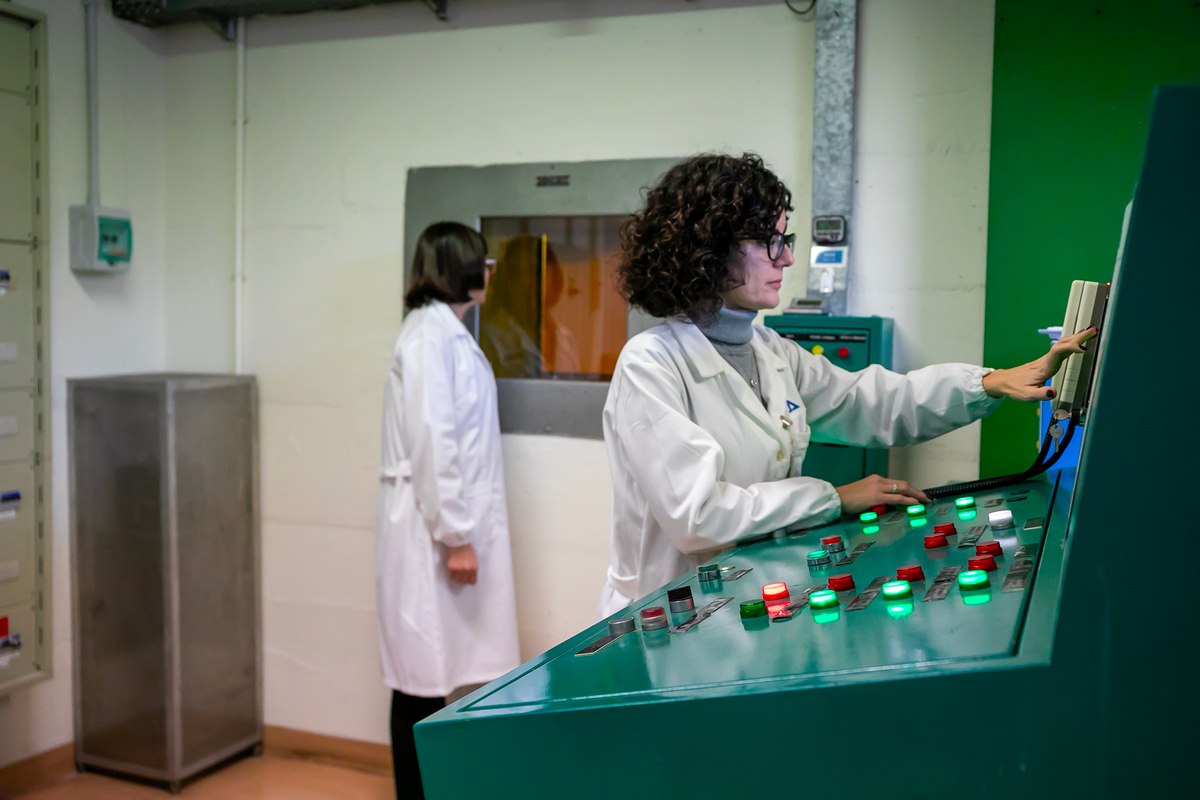
Tests were conducted at the Calliope irradiation facility of ENEA’s Nuclear Department at the Casaccia Research Centre in Rome on four types of Italian wheat: one durum wheat and three soft wheat varieties from conventional, organic and integrated farming systems.
“Based on the results obtained, this type of irradiation could also be applied to other polysaccharide-based products such as maize, a cereal particularly vulnerable to contamination by fungi harmful to human and animal health,” said Alessia Cemmi. “In this context, we are participating in a project funded by Coldiretti Toscana focused on eradicating these biodeterioration agents through greener and more sustainable approaches compared to traditional methods such as pesticide use.”
The study is part of the METROFOOD-IT project, coordinated by Claudia Zoani from ENEA’s Sustainability Department. The objective is to create a national Italian network aimed at strengthening research infrastructure for metrology and open-access data management in the agri-food sector.